
Last updated September 20, 2026
Full 25-point door and opener safety check with every visit - springs, cables, rollers, tracks, and your LiftMaster or Chamberlain opener included
You get a price before we start. It does not change when the truck arrives.
 Before
 After
After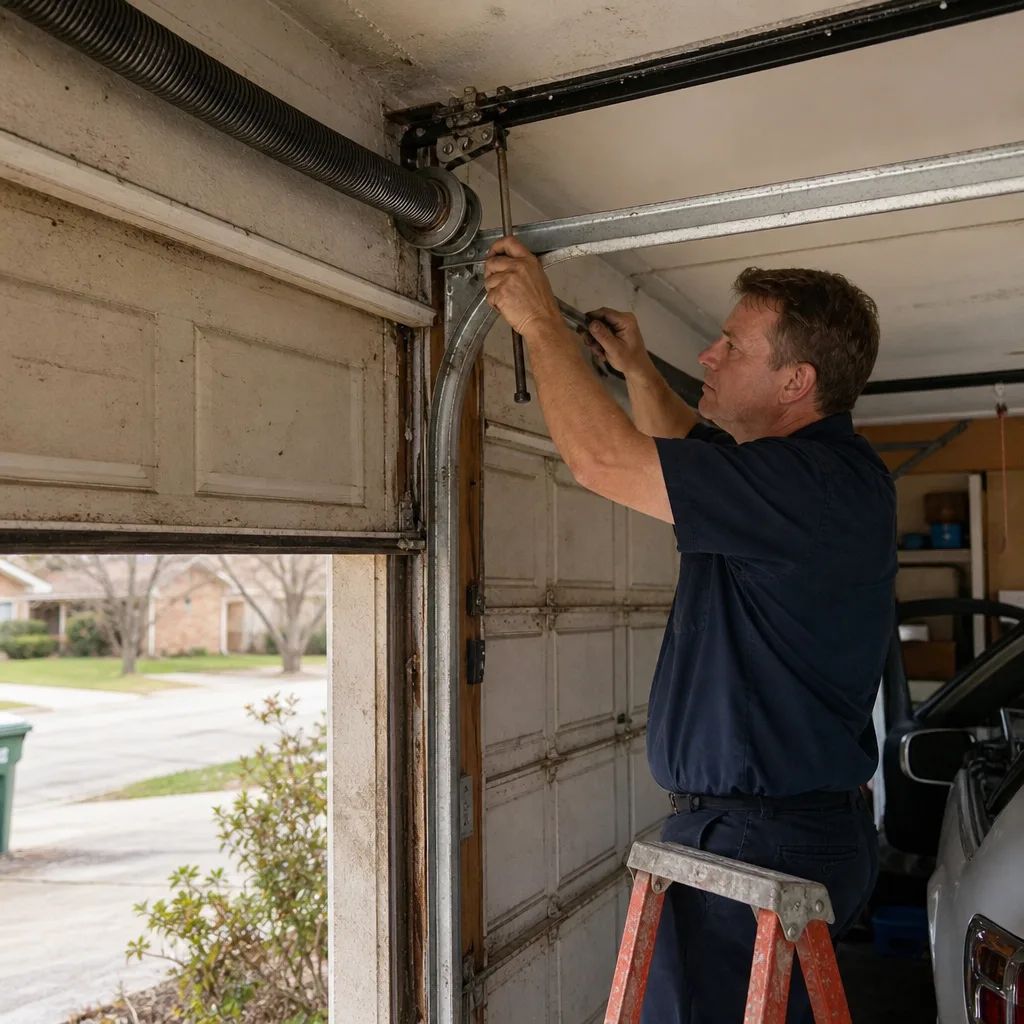 Before
 After
After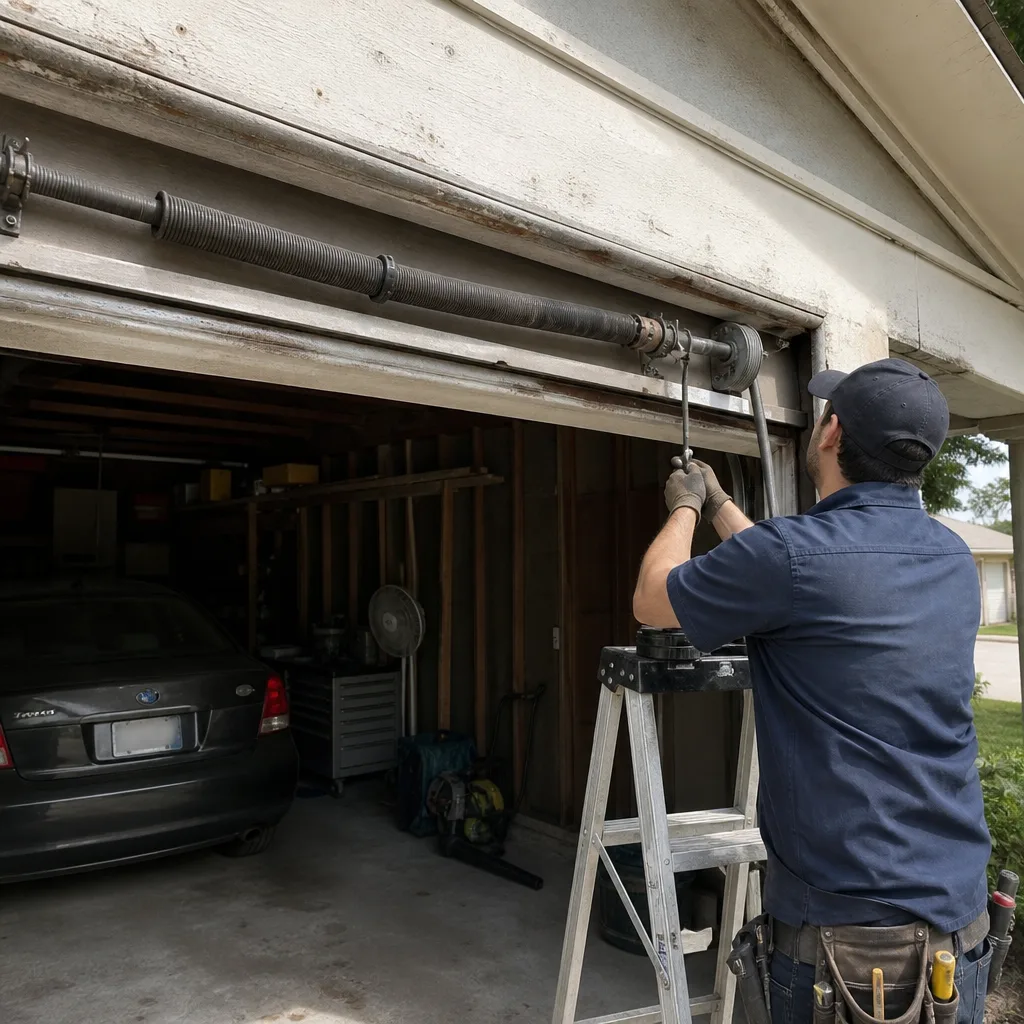 Before
 After
AfterThe Complete Guide to Garage Door in Arlington
The average Arlington home has a garage door with 14 moving parts. Most homeowners can name two of them: the door and the opener. That gap is exactly why repair quotes are so easy to inflate, and why a homeowner who knows what a torsion spring actually does walks into a service call with an entirely different level of control. This guide names every component, what it costs to maintain or replace in Arlington’s market, and why the city’s soil and housing stock shape those numbers more than most national guides ever admit. By the end, you’ll know how to read a garage door the way a technician does.
Quick Answer
Garage door systems in Arlington consist of five interacting subsystems: the panels and track, the counterbalance springs, the opener, the weather sealing, and the safety sensors. A well-maintained door lasts 15 to 20 years in Arlington’s climate, though the springs typically need replacement every 7 to 9 years, a decision explored further in our DIY vs Professional Garage Door: The Arlington Homeowner’s Decision Guide. Repair costs for individual components range from $95 for a sensor alignment to $350 for a torsion spring replacement to $1,800 for a full opener and rail system swap.
Table of Contents
- The Anatomy of a Garage Door System: 14 Moving Parts, Named
- Why Arlington’s Soil Moves Your Garage Door Out of Square
- Component-by-Component Costs in Arlington: What Each Part Actually Costs
- Repair vs. Replace: The Specific Measurements That Decide
- How to Read Your Garage Door’s Age from the Manufacturer Stamp
- The Opener Decision: Chain, Belt, or Screw Drive for an Arlington Home
- A Maintenance Schedule That Actually Matches Arlington’s Climate
- Safety Systems: What the Code Requires and What Fails Silently
BeforeAfterThe Anatomy of a Garage Door System: 14 Moving Parts, Named
A residential garage door is not a single object. It is a counterbalanced machine, and every part of it wears at a different rate. Here are the components, using the trade names a technician will write on your invoice:
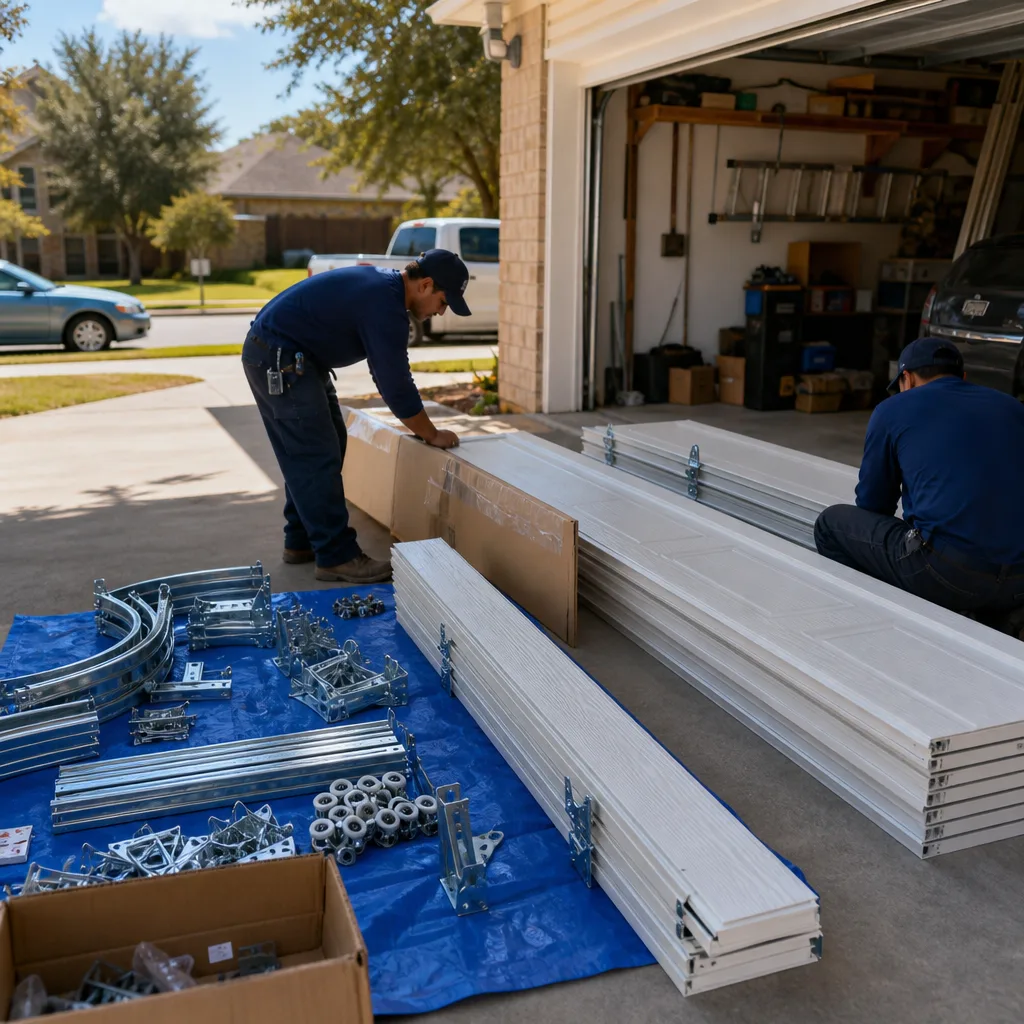
- Panels (sections): The visible door surface, typically four sections on a standard 7-foot door. Steel thickness in Arlington’s market ranges from 25-gauge (economy, at about $850 installed) to 18-gauge (a heavier, quieter door at about $1,900).
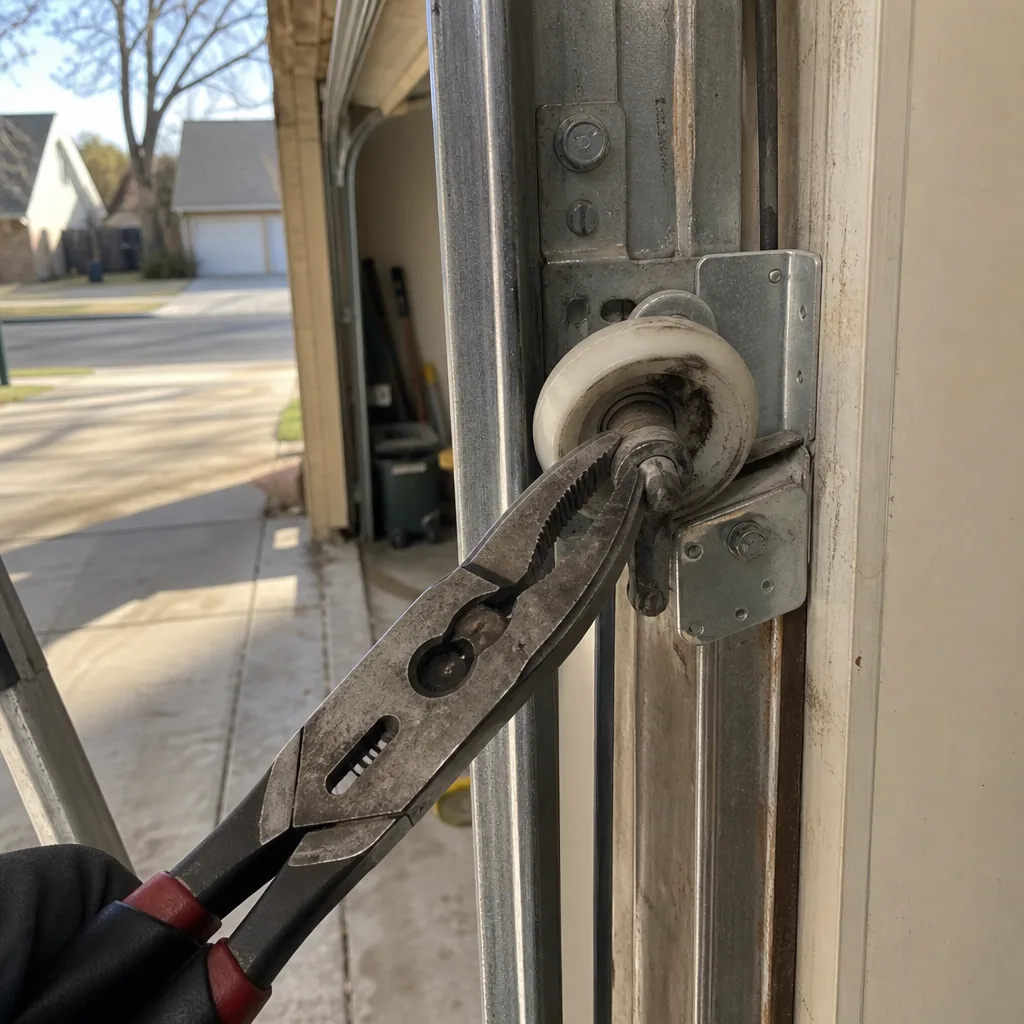
- Rollers: The wheels that ride in the track. Nylon rollers with sealed ball bearings run about $12 each and last 10 to 12 years. Steel rollers with no bearings cost $4 each, run loud, and wear the track faster.
- Hinges: Connect the panels at three or four points across the door’s width. A center hinge costs $15 parts and labor to replace on most doors.
- Track: The vertical and horizontal steel rails that guide the door. Standard 2-inch track is on most Arlington homes; larger doors or those with high-lift configurations use thicker or longer track.
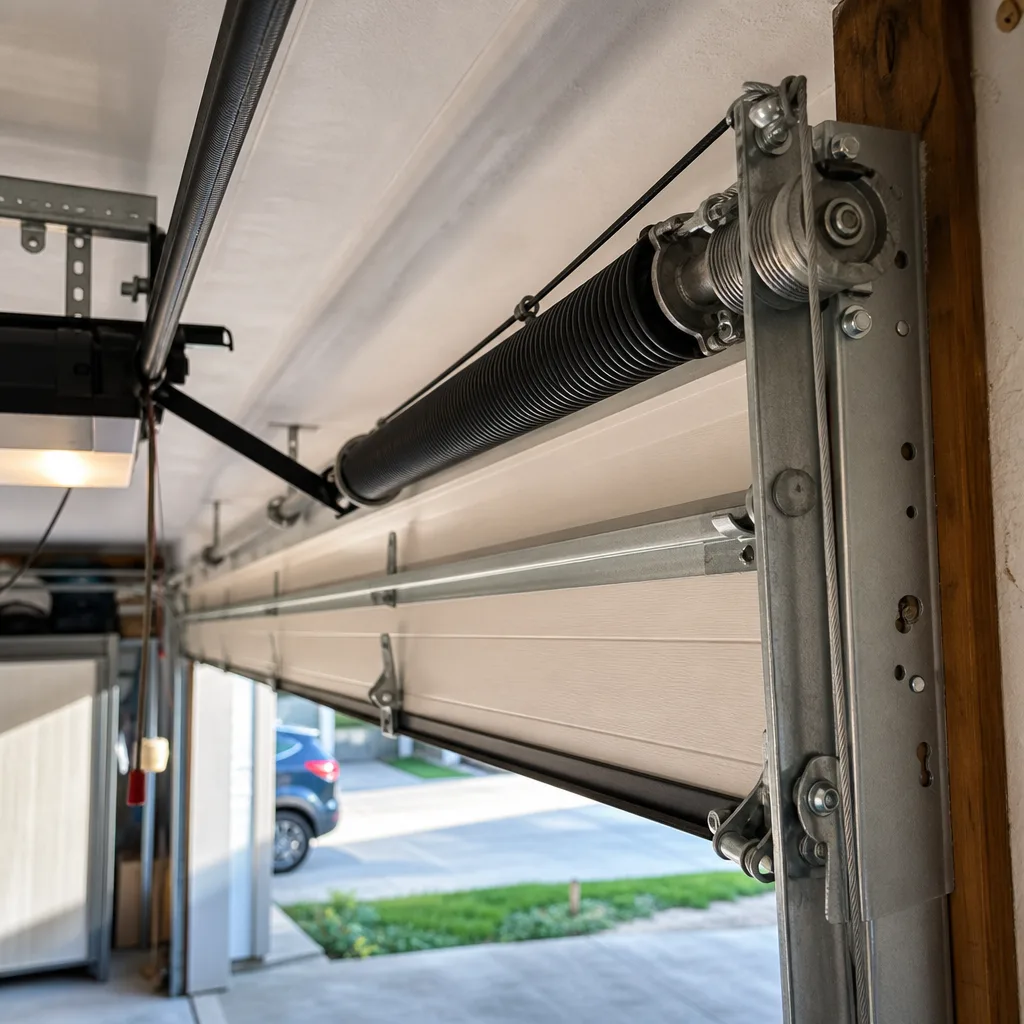
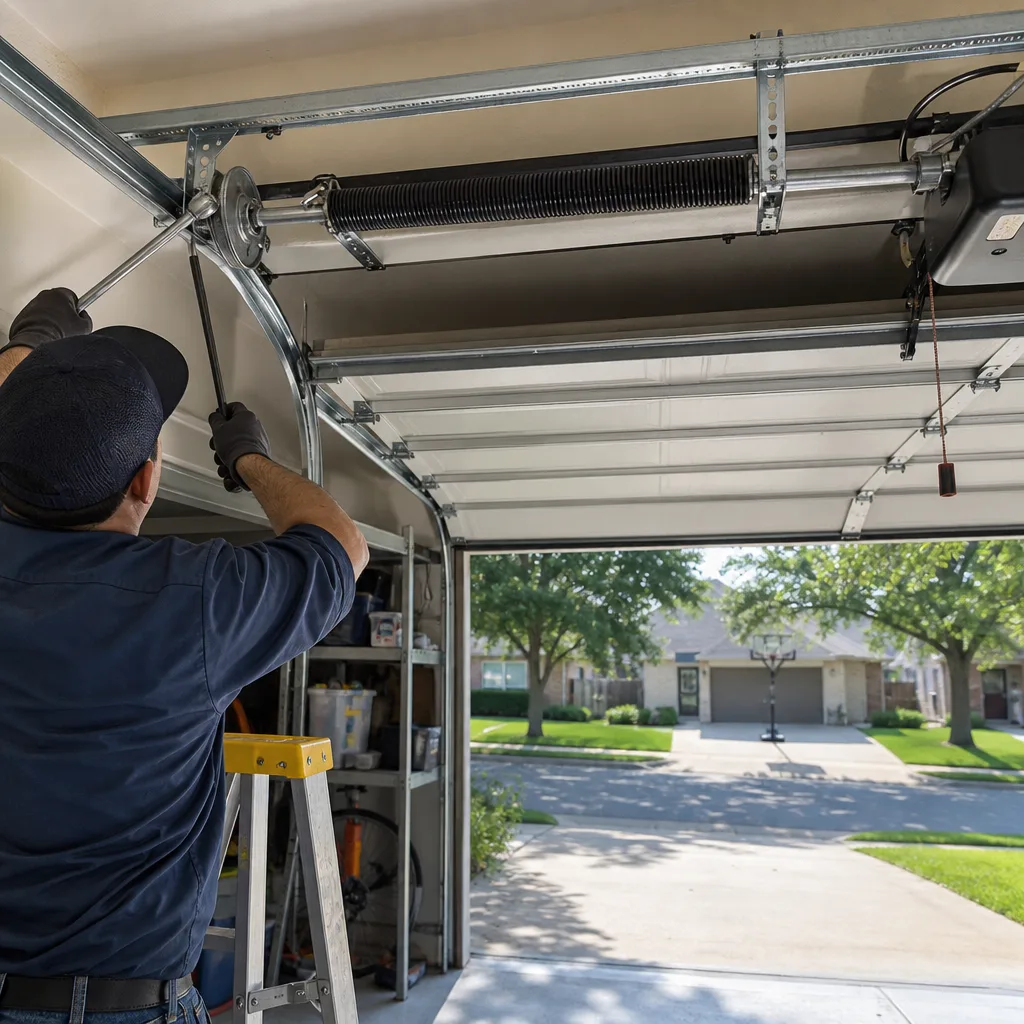
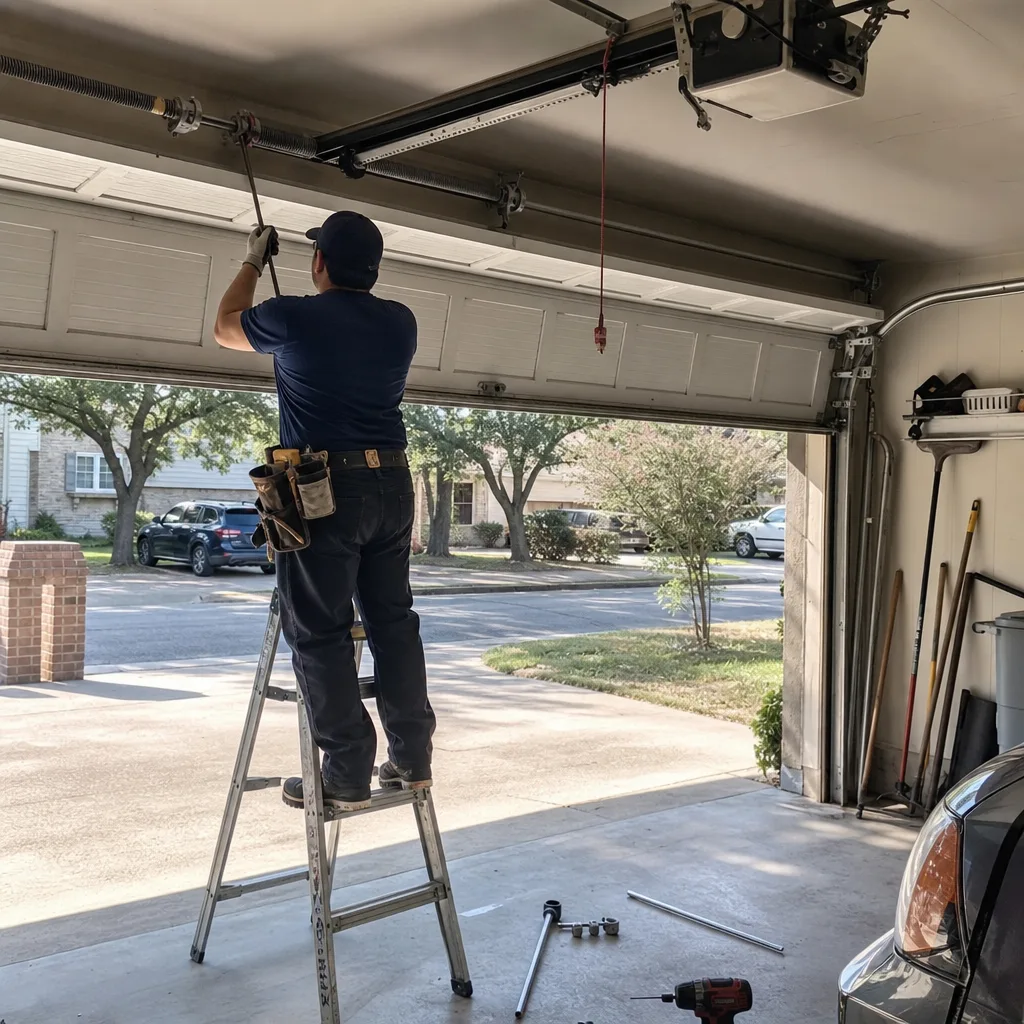
- Torsion spring: The single most replaced component in any garage door. It mounts above the door and stores the energy that lifts the door, so the opener only guides it. Standard springs on a 7-foot door are rated for 10,000 cycles; a typical Arlington home uses 8,000 to 12,000 cycles before the spring snaps.
- Cable drums: The grooved wheels at each end of the torsion bar that wind and unwind the lifting cables. A worn drum can fray a cable; replacements run $40 each before labor.
- Lifting cables: The steel cables that attach the bottom of the door to the drum. When a spring breaks, these cables often jump the drum and kink or fray. A pair of cables costs $65 installed on average.
- Bottom brackets: The steel brackets that hold the cables to the bottom panel. In Arlington, bottom brackets corrode faster than in drier climates, especially on doors facing south and west sun.
- Bottom seal (weather strip): The U-shaped rubber strip along the bottom of the door that keeps water and pests out. It hardens in Texas heat within 3 to 5 years and should be replaced when light shows through.
- Track bolts and fasteners: These loosen over time as the door cycles. A door that rattles on opening usually has loose track bolts.
- Opener motor and gear assembly: The motor that drives the trolley. The gear inside a chain-drive opener wears to a smooth, stripped condition after 8 to 10 years, at which point the motor runs but the door does not move.
- Trolley carriage: The sled that travels along the opener rail, pulled by the chain or belt. When the carriage’s internal teeth strip, the door jerks or reverses mid-travel.
- Limit switches: The settings that tell the opener where the door stops at the top and bottom of travel. A door that slams onto the concrete or stops 6 inches short needs a limit adjustment or a replacement logic board.
- Safety sensors (photo eyes): The two photo cells mounted 6 inches above the floor on each door jamb. They must maintain an unbroken beam; if one is misaligned or dirty, the door refuses to close.
When you can name those 14 parts, you can read a quote line by line. You can also tell whether a technician is replacing a part or dressing up an adjustment. That is the entire game.
Why Arlington’s Soil Moves Your Garage Door Out of Square
Arlington sits on the Eagle Ford Shale, a clay-heavy formation that expands when wet and contracts when dry. The city’s pattern of wet springs and blistering, drought-prone summers means the soil under a slab foundation swells and shrinks in a cycle that repeats every year. Foundations move. Garage door openings, which are the widest opening in the house, move with them.
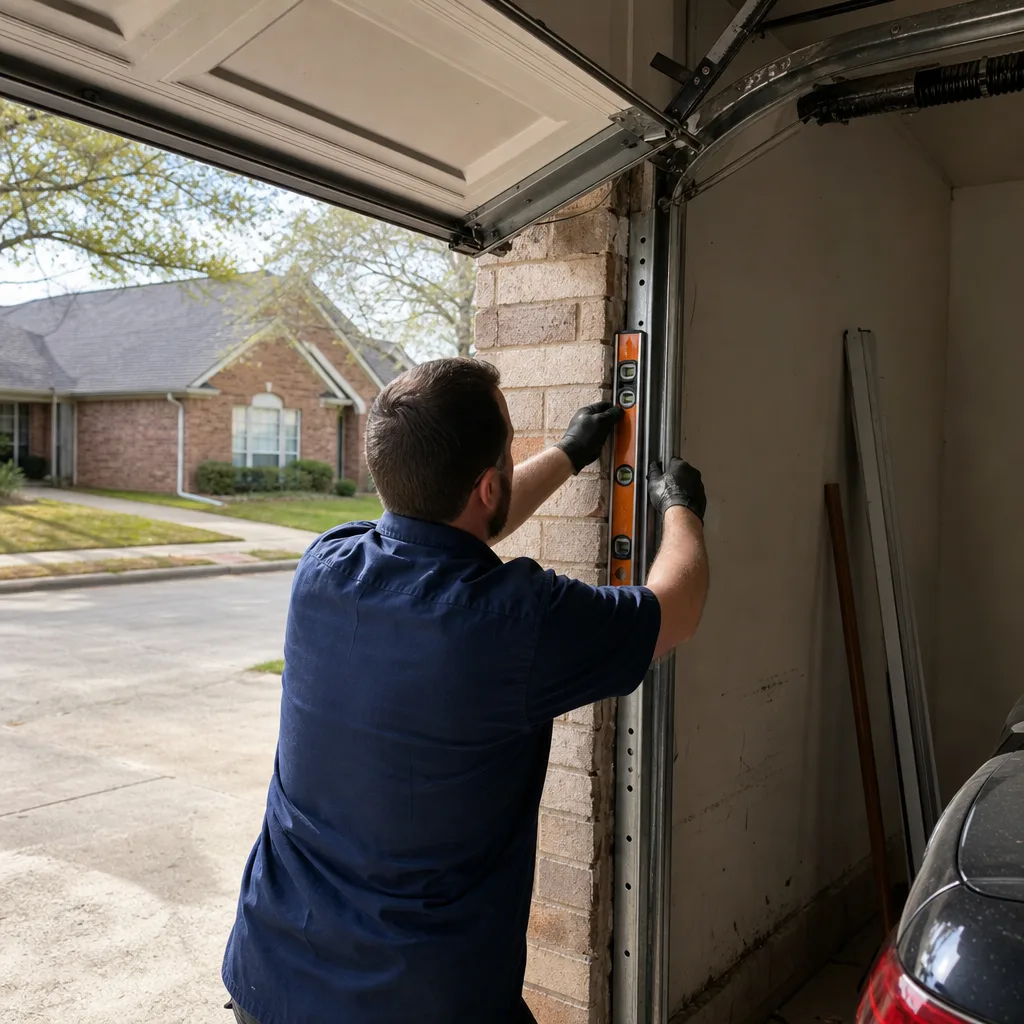
We see the result on service calls across Arlington: a door that was square when the house was built in 2018 is now binding against the jamb on one side by 2026. The homeowner assumes the door is broken. What actually happened is the foundation shifted by a quarter inch, and the jamb moved with it. The fix is not a new door. The fix is an adjustment of the track and hinges to accommodate the new geometry, and in some cases a re-shimming of the track brackets.
In our experience across Arlington, the neighborhoods most prone to this are those built on expansive clay with minimal soil preparation, particularly older sections of North Arlington and parts of the Dalworthington Gardens area, where homes from the 1970s and 1980s sit on slabs that predate modern soil conditioning. Newer developments in Southeast Arlington, where builders cut deeper and compact fill more aggressively, see fewer door-misalignment issues, though they are not immune.
The practical takeaway: if your door scrapes along the side track, or if the gap at the bottom is tighter at one end than the other, the odds are better than even that you are looking at a foundation-shift issue, not a door problem. A technician who reaches for a new door before measuring the opening with a level is billing you for a fix that will not last.
Component-by-Component Costs in Arlington: What Each Part Actually Costs
Here are the working price ranges we quote for parts and labor in Arlington. These are for standard 7-foot residential doors on single-family homes. Taller doors, heavier wood doors, and doors with unusual track configurations shift these numbers upward.
| Component | Parts Range | Labor Range | Typical Total |
|---|---|---|---|
| Torsion spring (single) | $60-$120 | $100-$180 | $160-$300 |
| Torsion spring (pair, recommended) | $120-$240 | $150-$220 | $270-$460 |
| Rollers (10 nylon, ball bearing) | $110-$140 | $60-$90 | $170-$230 |
| Lifting cables (pair) | $35-$65 | $60-$90 | $95-$155 |
| Bottom seal (weather strip) | $20-$45 | $40-$65 | $60-$110 |
| Safety sensors (pair) | $40-$80 | $50-$80 | $90-$160 |
| Logic board replacement | $85-$140 | $70-$100 | $155-$240 |
| Full door replacement (steel, 7-ft) | $850-$2,400 | $400-$700 | $1,250-$3,100 |
| Opener motor and rail (complete) | $250-$450 | $180-$280 | $430-$730 |
Those are the numbers. A flat, written price quoted and agreed before any work starts is the only quote that means anything on a service call. We write the scope and the price on the same page, and you sign before the technician touches the door. That is Clause 1 of The Haven Standard, and it exists because a verbal estimate is not an estimate; it is an opening position.
One line item people forget to ask about is the disposal fee on a door replacement. Some companies in the Arlington market add $75 to $150 to haul away the old door. Ask. If the quote does not state whether haul-away is included, assume it is not.
Repair vs. Replace: The Specific Measurements That Decide
There are only four conditions that justify replacing an entire garage door instead of repairing a component. Here they are, with the numbers that define them:
- Panel delamination or rust-through: On a steel door, water that penetrates the outer skin and reaches the foam or polyurethane core will separate the layers over time. If you can press the panel and feel it flex independently of the frame, the door is nearing the end. Replacement cost in Arlington: $1,250 to $3,100. Repairing a single delaminated panel on a door older than 10 years is usually throwing money after a door that is already failing.
- Structural bend in the track or the door itself: A car backing into a closed door is the most common cause. If the track is bent more than 15 degrees out of plane, or if the door’s bottom panel is creased across more than half its width, the door will never sit square again, no matter how many adjustments are made.
- Spring cycles exhausted for the second time: A standard torsion spring lasts 7 to 9 years in Arlington. When a spring snaps for the second time on the same door, the door is 14 to 18 years old. You can keep replacing springs, but you are allocating money to a system whose other components are also aging out. The math usually favors replacement.
- Noise that persists after rollers, hinges, and opener are replaced: Some doors are simply built thin. A 25-gauge door with no insulation will rattle no matter what you do. The only fix is a heavier door with a thicker skin, which is also the only fix that gives you a quieter, more insulated garage. In Arlington’s climate, where a garage can hit 120 degrees in August, that upgrade matters more than most guides admit.
Everything else, including the vast majority of service calls, is a repair. Misaligned sensors, broken springs, worn rollers, and frayed cables at Garage Door Repair in Arlington are fixable in one visit, and they should be fixed before they compound.
How to Read Your Garage Door’s Age from the Manufacturer Stamp
Every garage door manufactured in the last 30 years carries a stamp or label from the manufacturer, and that stamp contains the month and year of production. Knowing how to read it tells you the door’s age, which tells you how to allocate your repair dollars.
On Clopay doors, look for a white sticker on the inside of the bottom panel, near the hinge line. It carries the order number and the manufacture date. On Amarr doors, the stamp is typically printed on a label attached to the edge of the top section, face-down where the door meets the header. On Wayne Dalton doors, the sticker is usually on the interior of the top panel, and it includes the model number along with the date. Genie openers, made by the same company that makes LiftMaster’s parent brand’s competitors, carry the date on a plate on the motor housing itself.
The stamp will show a month and a year in standard format, or a Julian date: the first three digits are the day of the year, the last two are the year. A stamp reading “18517” means the 185th day of 2017, which is July 4.
Once you have the age, the math is straightforward. A door under 10 years old with a broken spring gets a new spring and a decade more of service. A door over 15 years old with a broken spring should get a harder look at the full system, because the spring breaking is the first of several aging components that will each demand attention within 24 months. There is no obligation to replace a perfectly functional door, but the information lets you make the call instead of inheriting a series of surprise invoices.
The Opener Decision: Chain, Belt, or Screw Drive for an Arlington Home
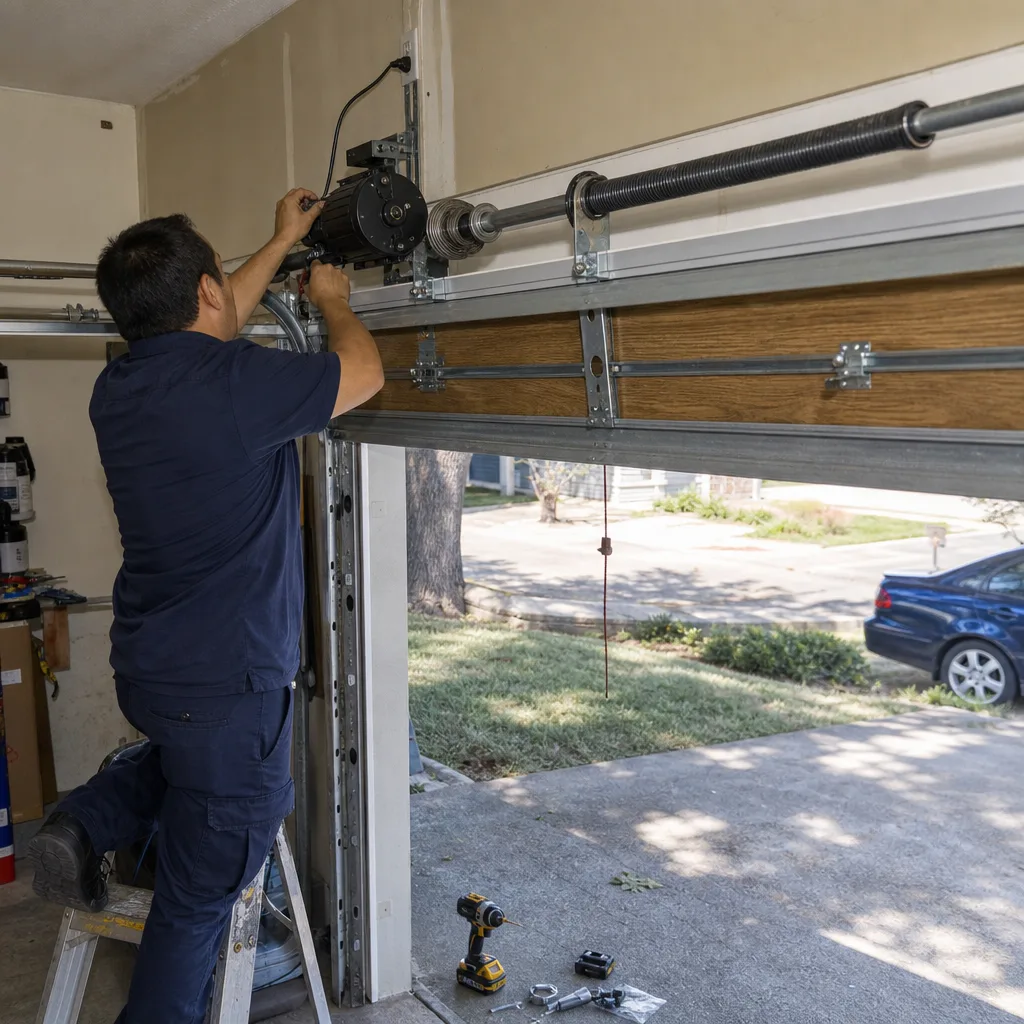
The opener is the one component where the homeowner gets a genuine choice, and the trade names matter less than the application. Here is the honest breakdown for an Arlington garage:
- Chain drive: The original design, and still the cheapest at $180 to $280 for the unit. It is loud enough to hear through a bedroom wall. If the garage is attached to the house and a bedroom sits above or adjacent, a chain drive will wake someone up.
- Belt drive: A steel-reinforced rubber belt replaces the chain. Quiet enough for a room above the garage, at $220 to $350 for the unit. The belt lasts longer than a chain and requires no lubrication.
- Screw drive: A threaded steel rod drives the trolley. Fewer moving parts, but in an uninsulated Arlington garage, the temperature swings cause the rod to expand and contract, which shifts the limit settings. Screw drives are simpler, not necessarily better here.
What matters more than the drive type is the opener’s logic board and the rail length. A 1/2-horsepower opener on a standard 7-foot door is fine. A heavier 18-gauge steel door or a carriage-house door needs a 3/4-horsepower unit. We service and install all of them, and Garage Door Opener Repair & Installation in Arlington includes a written price before the opener is unboxed, same as the doors themselves.
On the opener question, one piece of advice that stands against the grain of the industry: the opener is the least important part of the system to upgrade. People fixate on the opener while their springs are eight years into a seven-year life. Your money goes further on springs, rollers, and a proper bottom seal than on a whisper-quiet opener bolted to a door that binds against the track.
A Maintenance Schedule That Actually Matches Arlington’s Climate
Arlington’s heat does to garage door components what salt does to cars in the Northeast: it accelerates aging, just in a different way. Rubber hardens, lubrication evaporates, and the temperature swings between a 100-degree day and a 50-degree night pull at every fastener. Here is a schedule that accounts for that reality:
- Every 6 months: Inspect the rollers, hinges, and track for visible wear. A roller that is no longer round will wear the track unevenly. Listen for grinding; that is a bearing telling you it is dry or dying.
- Every 12 months: Test the safety sensors by closing the door with an object in the beam path. If the door does not reverse within 2 seconds of contact, the sensors need attention. This is not a maintenance item; it is a safety item regulated by federal law since 1993.
- Every 12 months: Re-apply a lithium-based grease to the torsion spring and the opener rail. Do not use WD-40, which displaces moisture but does not lubricate. A spring that goes dry develops surface rust, and a rusted spring breaks sooner.
- Every 3 to 5 years: Replace the bottom seal. In Arlington’s heat, the rubber compound hardens and shrinks. Light visible under the door when closed is the sign.
- Whenever the door scrapes or binds: Address it immediately. A binding door puts uneven load on the spring, the opener gear, and the hinges, and that load translates to shorter part life across the board.
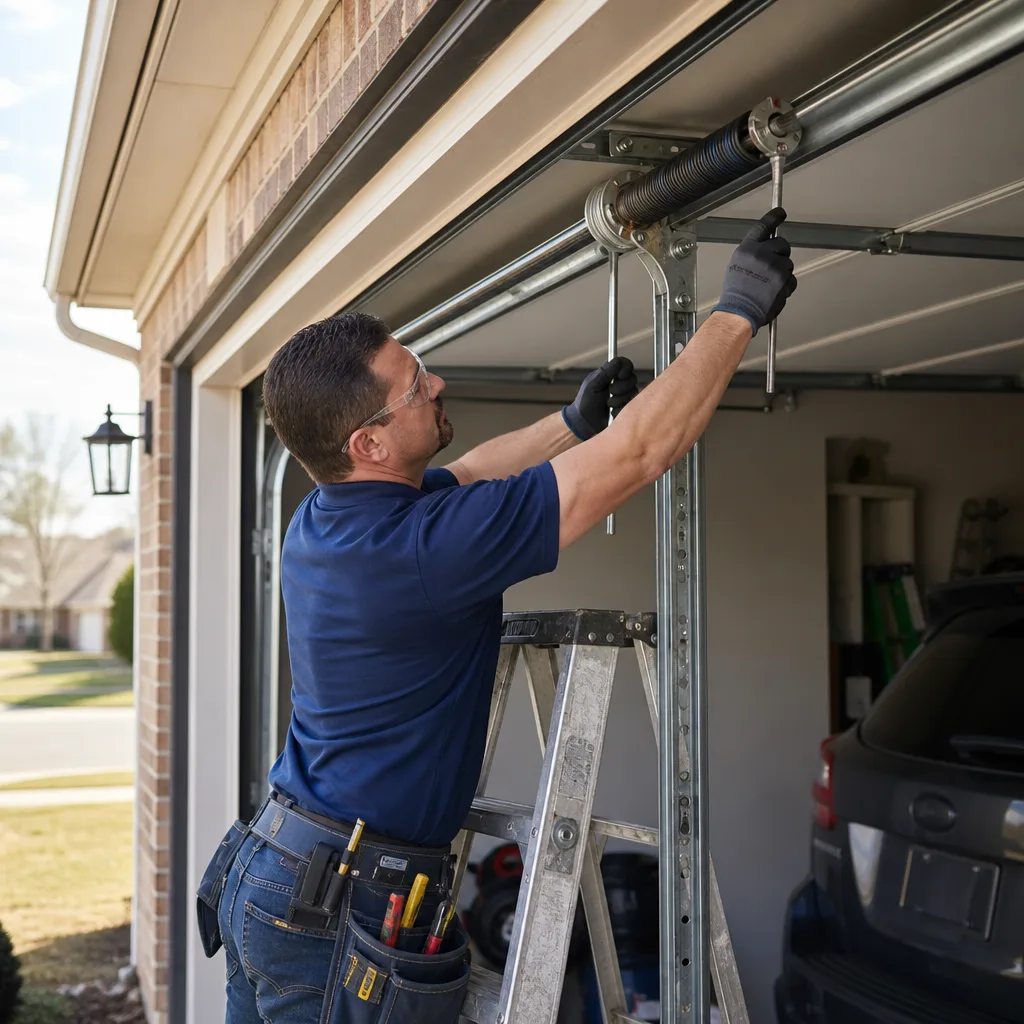
One note on safety: the torsion spring is under tension sufficient to lift a 200-pound door, and attempting to adjust or replace it without the correct winding bars and experience has caused serious, life-altering injuries. This is the one component where we will never offer a DIY path. Call someone who does it daily, not someone who learned on YouTube. That is not a sales line; it is the professional boundary every real technician holds.
Safety Systems: What the Code Requires and What Fails Silently
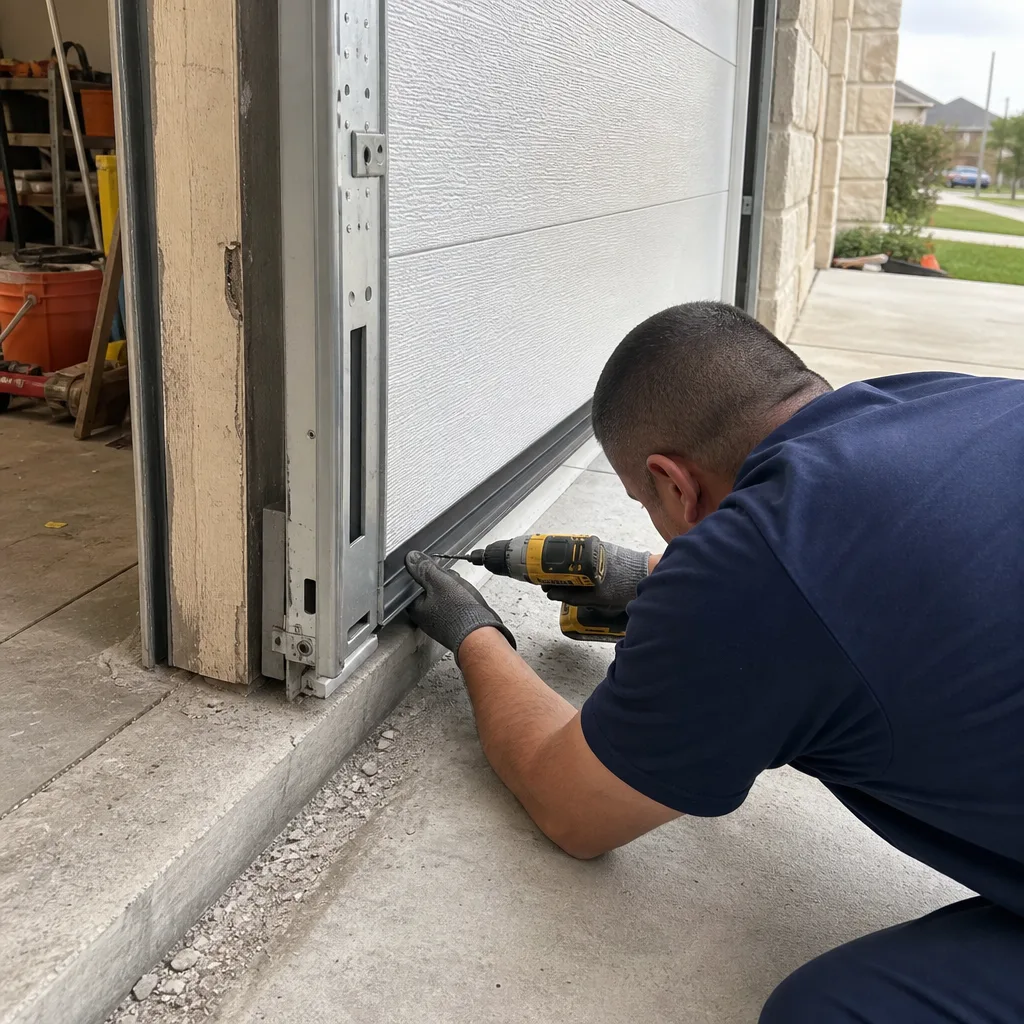
Federal law has required automatic garage door openers to include an auto-reverse mechanism since 1993, as covered in our Garage Door Permits, Codes & Inspections in TX: What You Need to Know. The law was passed after a series of child fatalities, and it mandates two independent safety systems: the photo-eye sensors at the door base, and the force-sensing mechanism that reverses the door if it meets resistance.
The photo eyes are the component we are called for most often in Arlington. They must be mounted no higher than 6 inches above the floor, they must face each other directly, and the beam must remain unbroken. A sensor that has been knocked askew by a bicycle, a lawn mower, or a garbage can will prevent the door from closing, which reads as an opener malfunction but is actually a safety system doing its job.
The force-sensing mechanism is the silent failure. It is a setting on the opener’s logic board that controls how much resistance the door must meet before it reverses. If it is set too high, the door will keep pressing down on whatever is in its path, and the photo eyes become the only guardrail. Test it once a year by lowering the door onto a roll of paper towels. It should reverse on contact, not after crushing the roll. If it does not, adjust the force setting or replace the logic board.
We recommend any door older than 1993, or any opener that predates the photo-eye requirement, be replaced entirely. The upgrade is not cosmetic. It is the difference between a door that stops and a door that doesn’t.
Common Mistakes to Avoid
- Lubricating the track: The rollers ride on the inside of the track; the track itself should be clean and dry. Grease on the track collects Arlington’s fine clay dust and becomes an abrasive paste that wears rollers faster.
- Replacing one spring instead of a pair: On a two-spring door, both springs have the same cycle count. Replacing only the broken one leaves a fatigued partner that will snap within months, and you will pay a second service call for a second spring.
- Ignoring a slow-open condition: If the door takes longer than 12 seconds to open, a component is failing. Waiting until it fails completely turns a $180 spring replacement into a $400 emergency call, because the spring snap usually happens when the door is mid-open and the car is already running.
- Purchasing a door by brand alone: Clopay, Amarr, and Wayne Dalton all make excellent doors and economy doors. The gauge of the steel, the type of insulation, and the warranty length matter more than the logo on the panel.
- Trusting a quote that does not show the part: If a technician says a spring is broken and immediately quotes a replacement without showing you the break, you have no way to verify the diagnosis. Clause 4 of The Haven Standard exists because we photograph the failed component before quoting a replacement. You should see the part that failed. Every time.
- Forgetting the garage door in a home purchase: In Arlington’s 2015-to-2025 housing boom, buyers often waived inspection contingencies. A garage door with an exhausted spring and delaminating panels is a $2,500 problem hiding under a fresh coat of paint. If you are buying, have the door inspected separately.
When to Call a Professional
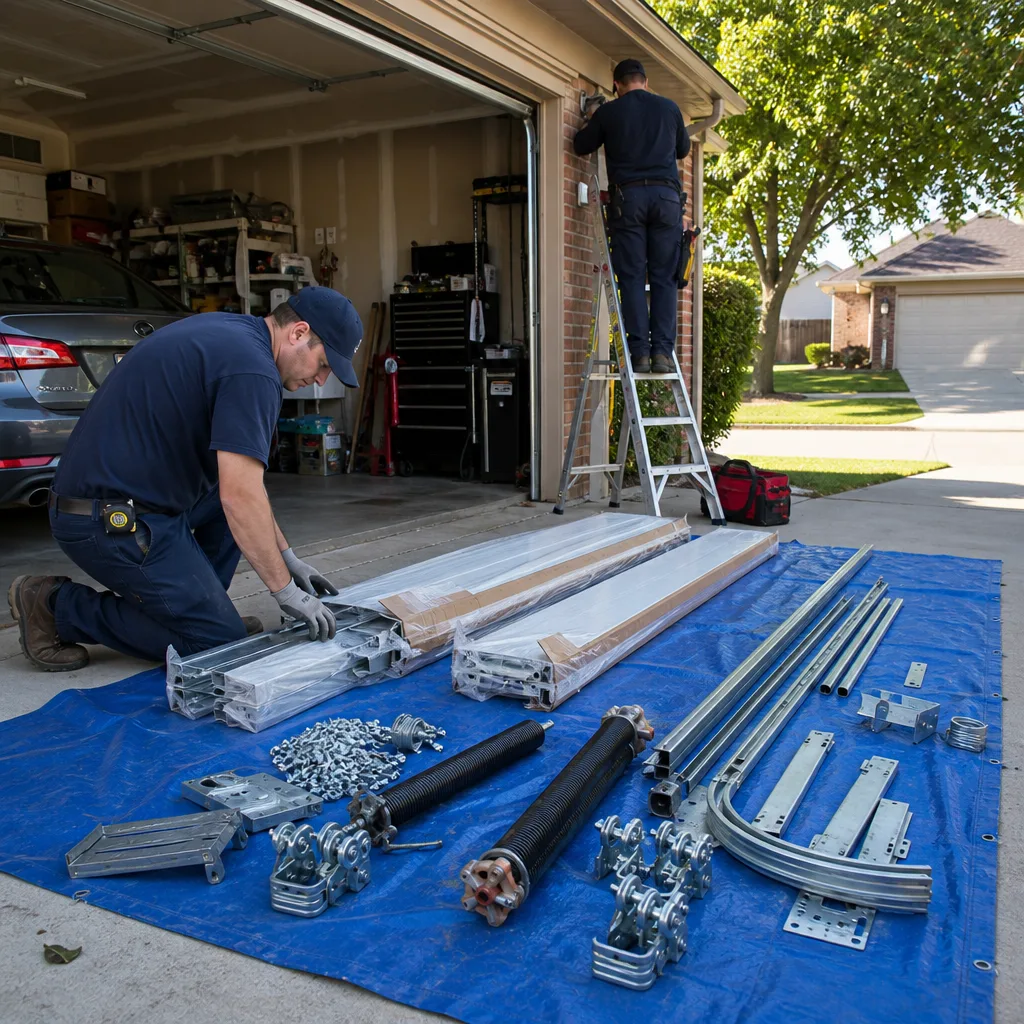
Call a professional the moment you hear a sound you cannot identify, see a gap that was not there before, or notice the door moving unevenly in the track. A torsion spring snap, a cable that jumps the drum, or a door hanging crooked are all conditions that worsen with every cycle, and each cycle costs you more. If you are not certain which component failed, do not guess. Servo Garage Doors Arlington offers free estimates in Arlington, and every estimate is a written price and written scope before any work begins. Call (682) 452-1782. In an emergency, a real person answers, day or night.
Frequently Asked Questions
A torsion spring replacement in Arlington typically runs $160 to $300 for a single spring and $270 to $460 for a pair, which is what we recommend on two-spring doors. The exact price depends on the spring’s wire gauge, length, and whether the door is a standard 7-foot or taller. Call (682) 452-1782 for a written quote before any work is scheduled.
Yes. For spring breaks, cable failures, and most other common repairs, we carry the parts on the truck and can usually complete the repair on the day you call. The exception is custom door panels or unusual track configurations that require ordering a part. Call (682) 452-1782 and we will tell you whether your repair can be same-day before we dispatch.
No. Under Clause 1 of The Haven Standard, the price we quote in writing is the price you pay, and the written scope is agreed before any work starts. If the technician finds an additional problem, it is quoted separately and only with your approval.
Our Arlington trucks carry torsion springs in the common gauges, lifting cables, rollers, hinges, sensors, and most opener logic boards and gears. We stock for the doors we see most often in Arlington: Clopay, Amarr, and Wayne Dalton residential doors, plus Genie and LiftMaster openers.
In Arlington’s heat, a standard steel door that is lubricated and adjusted regularly lasts 15 to 20 years. Uninsulated doors in west-facing garages, where the afternoon sun bakes the panels daily, trend toward the lower end. The springs, cables, and bottom seal all wear out on their own schedules, which is why a 20-year-old door has usually had two or three spring replacements by the time the panels give out.
A standard 7-foot steel door replacement in Arlington costs $1,250 to $3,100 installed, depending on insulation, steel gauge, and whether the old door needs to be hauled away. Heavier carriage-house doors and high-lift track systems run higher. Garage Door Installation in Arlington includes a written price and scope before any work is ordered, so you know the total before you commit.
The Bottom Line
Your garage door is a machine with a finite service life on every part, and Arlington’s climate and soil make those parts wear on a predictable schedule. The homeowner who can name the 14 moving parts, read a manufacturer stamp, and recognize the difference between a foundation shift and a broken spring is the homeowner who never pays twice for the same repair. That is the entire point of this guide, and it is the operating premise of Servo Garage Doors Arlington home. We write the price before we start, we photograph the part before we replace it, and we leave you with a documented record of what was found and what was done. Call (682) 452-1782 for a free estimate.
Written by Marcus Deller, Owner at Servo Garage Doors Arlington, serving Arlington since 2015. Explore more guides & resources.