
Last updated September 20, 2026
Full 25-point door and opener safety check with every visit - springs, cables, rollers, tracks, and your LiftMaster or Chamberlain opener included
You get a price before we start. It does not change when the truck arrives.
 Before
 After
After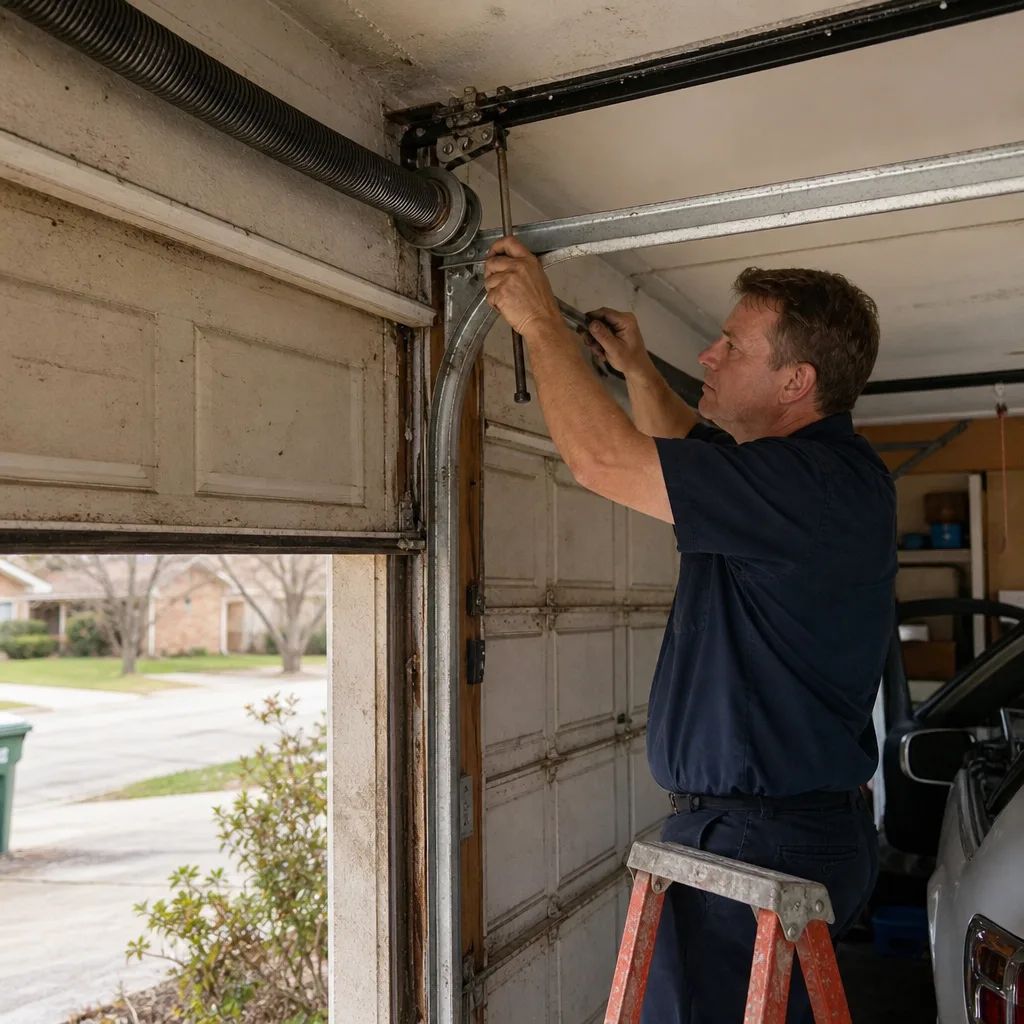 Before
 After
After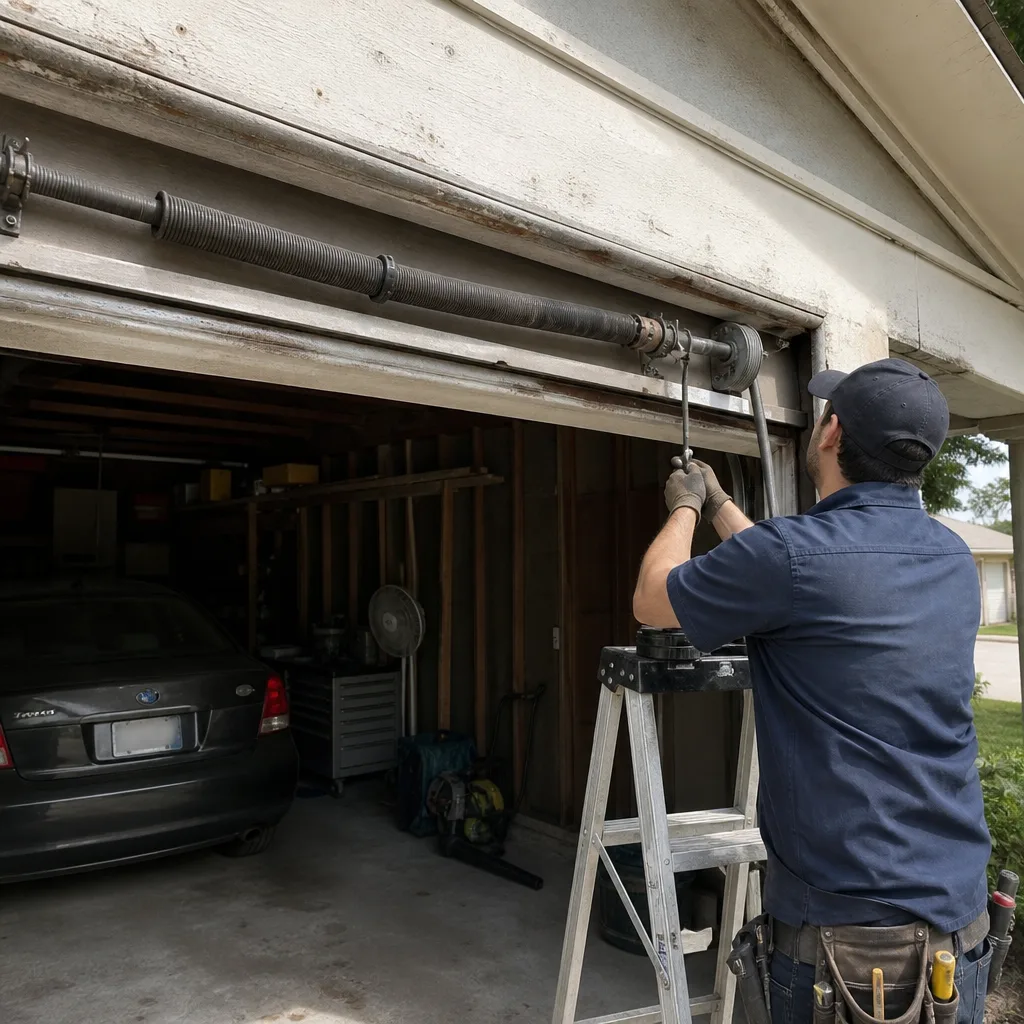 Before
 After
AfterGarage Door Warning Signs: A Arlington Homeowner’s Reference Guide
A garage door that hesitates for two seconds before moving is not a minor annoyance. It is a trolley carriage binding on a worn rail, and the next stage of that failure is a door that drops under load. Most warning-sign guides tell you what you might notice, but they skip the part that matters: which component is failing, how long you have, and whether you should stop using the door tonight. This guide closes that gap. We map each symptom to the specific part generating it, give you a realistic failure timeline, and tell you what is safe and what is not. If you live in Arlington, you will also learn how our climate and housing stock shape the failures we see most often. You will finish this guide knowing exactly what to photograph, what to say on the phone, and what a fair repair should cost.
Quick Answer
Most garage door warning signs trace to one of seven components: torsion springs, extension springs, cables, rollers, hinges, the opener’s trolley carriage, or the logic board. Some signs (a frayed cable, a door that reverses mid-cycle) require stopping use immediately, while others (a light squeak, a slow response) allow days or weeks of normal operation. The difference comes down to whether the failing part is load-bearing: anything under tension can fail catastrophically and without warning, and in Arlington’s humidity and heat, that timeline shortens.
Table of Contents
- Noise Diagnostics: Grinding, Squealing, and Popping Mapped to Specific Parts
- The Visual Cable Inspection Sequence: What Fraying Looks Like at Each Stage
- Speed and Force Anomalies: Too Fast, Too Slow, Uneven Movement
- Urgent Versus Watch-and-Wait: A Decision Framework
- How to Document Warning Signs on Video Before Calling a Technician
- Arlington-Specific Factors: Climate, Housing Stock, and What We See Most
- Common Mistakes to Avoid
- When to Call a Professional
- Frequently Asked Questions
- The Bottom Line
BeforeAfterNoise Diagnostics: Grinding, Squealing, and Popping Mapped to Specific Parts
Garage doors make noise. Some of it is normal: a well-maintained door produces a low mechanical hum as it travels. But three specific sounds indicate specific failures, and learning the difference will tell you which part to look at before you ever pick up the phone.
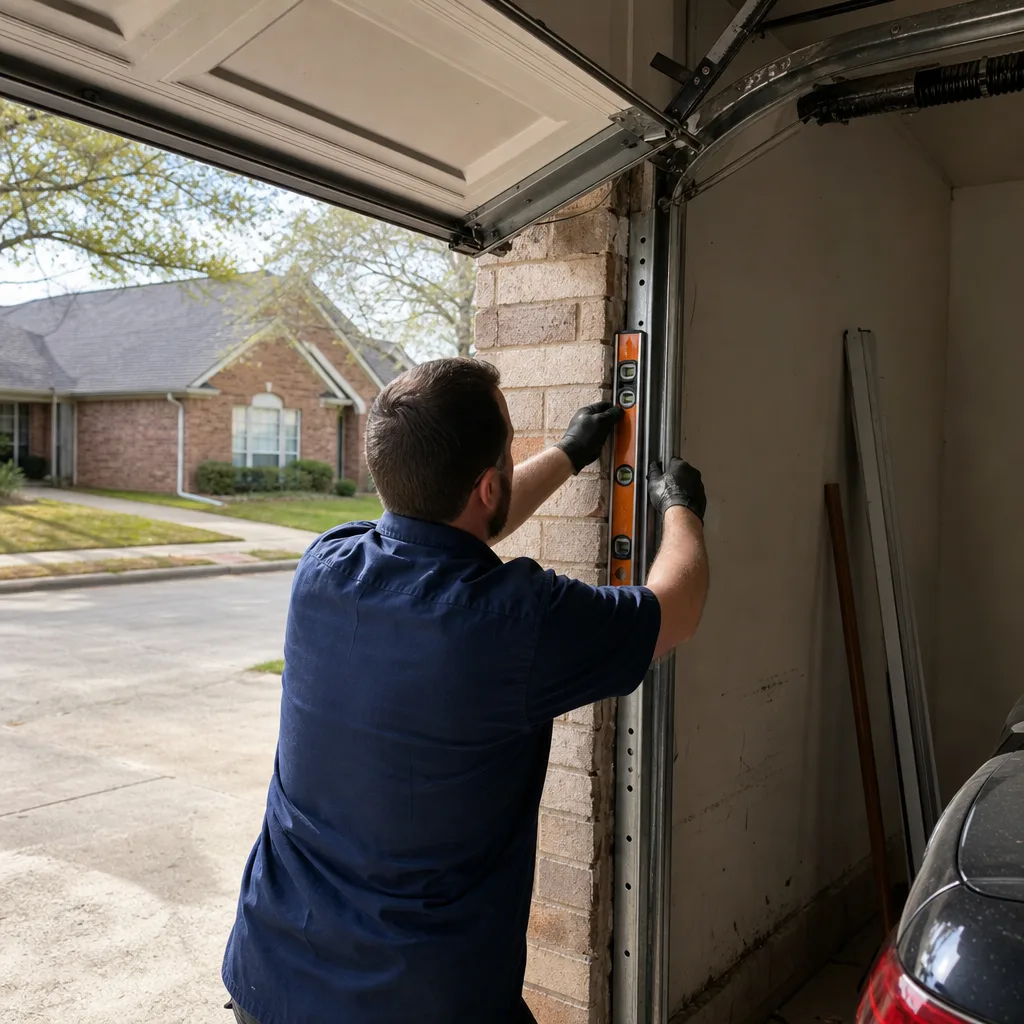
Grinding is a metal-on-metal sound, rough and uneven, often accompanied by visible hesitation in the door’s movement. In our experience across Arlington, grinding most often comes from the rollers: the small wheels that carry the door along the vertical and horizontal tracks. Rollers have bearings inside, and when those bearings wear out, the wheel stops spinning freely and starts sliding along the track instead. A door with worn rollers grinds. Left alone, a seized roller will eventually carve a groove into the track itself, and track replacement is a more expensive job than roller replacement.
Squealing is high-pitched, persistent, and often mistaken for a spring problem. It is not. Squealing comes from metal parts that lack lubrication: usually the hinges that connect the door panels, or the bearing plates at the ends of the torsion spring shaft. A dry hinge squeals because the steel pin is scraping against the steel barrel. The fix is lubrication with a silicone or lithium-based product, but note this: a hinge that has been squealing for months has been wearing for months. Lubricating it silences the symptom but does not restore material that is already gone. If the door has been squealing through an Arlington summer, have the hinges inspected for elongation.
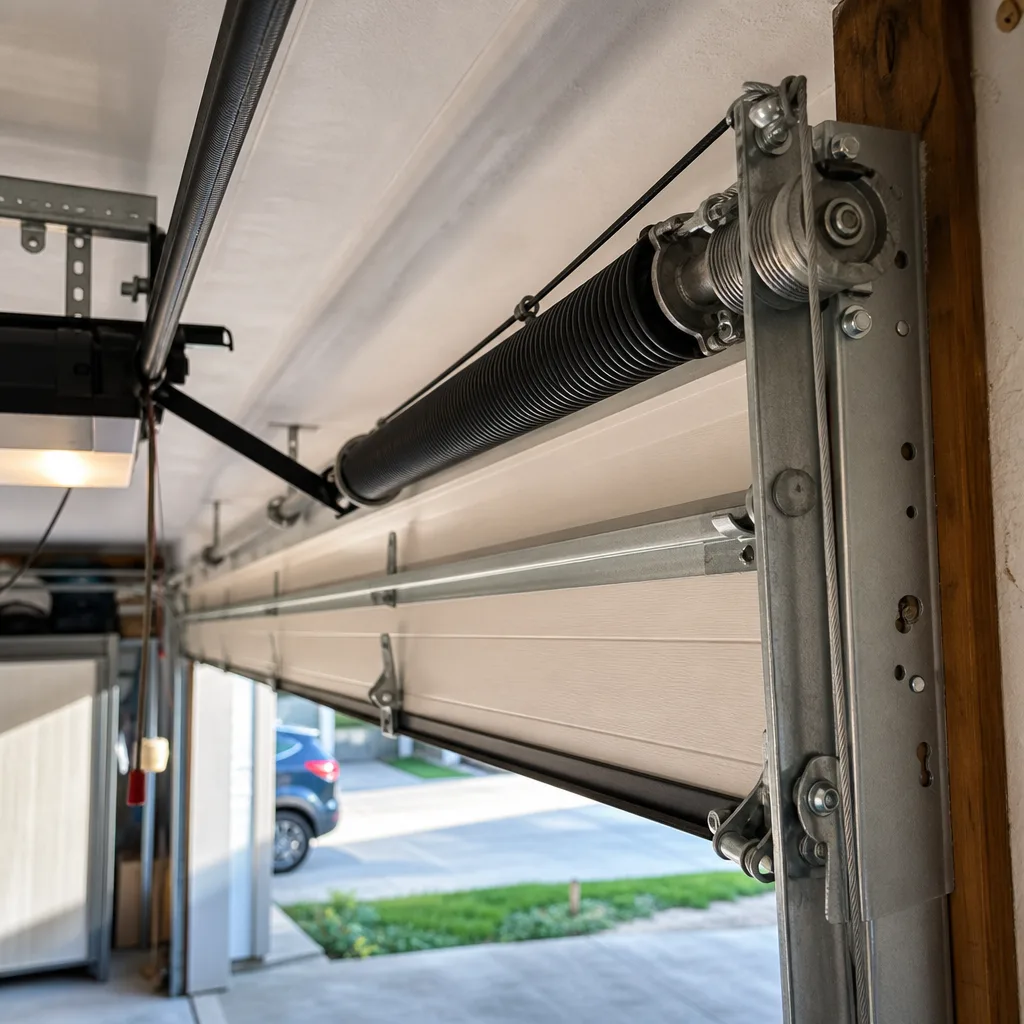
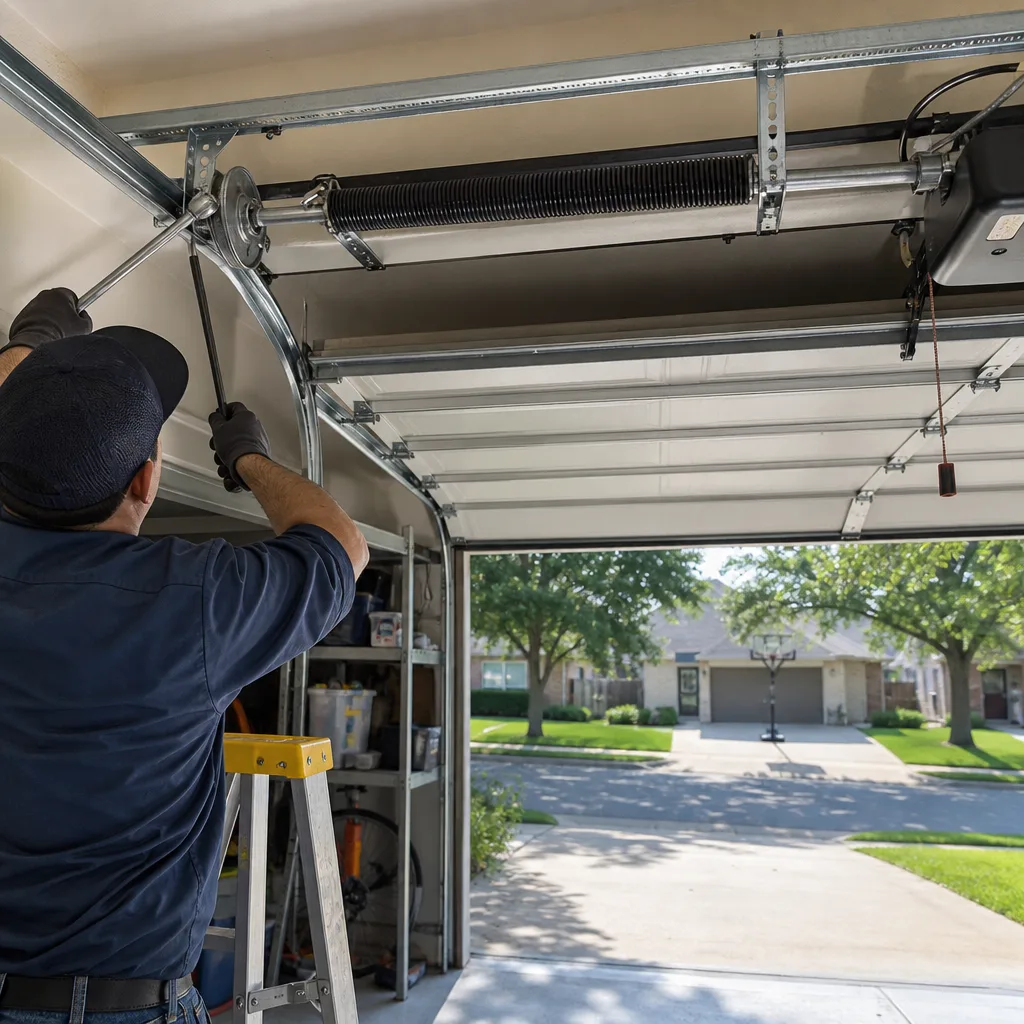
Popping is the sound of a torsion spring under stress. When a spring is nearing the end of its cycle life (most springs are rated for 10,000 cycles, which translates to 7 to 10 years of typical use in a Arlington household), the coils begin to lose tension unevenly. You will hear a sharp pop or snap as the door moves, sometimes followed by a visible gap in the spring coils. Popping is a warning sign that the spring is about to break. Do not ignore it. A broken torsion spring releases stored energy suddenly, and the door will not open, or worse, will drop if it is already up when the spring fails.
Here is a quick reference table for what you are hearing:
- Low rumble, consistent: normal operation, check lubrication every 6 months
- Grinding, uneven: worn roller bearings, or the door scraping the track, inspect within 2 weeks
- Squealing, high-pitched: dry hinge or bearing plate, lubricate now, inspect for wear within 30 days
- Popping or snapping: failing torsion spring, stop using the door and call a professional same day
We have repaired garage doors in Arlington where the popping had been present for three weeks before the spring finally broke, leaving the door pinned shut with a vehicle inside. The sound was the spring telling the homeowner it was done. The homeowner was not slow to act; he simply did not know what the sound meant. Now you do.
The Visual Cable Inspection Sequence: What Fraying Looks Like at Each Stage
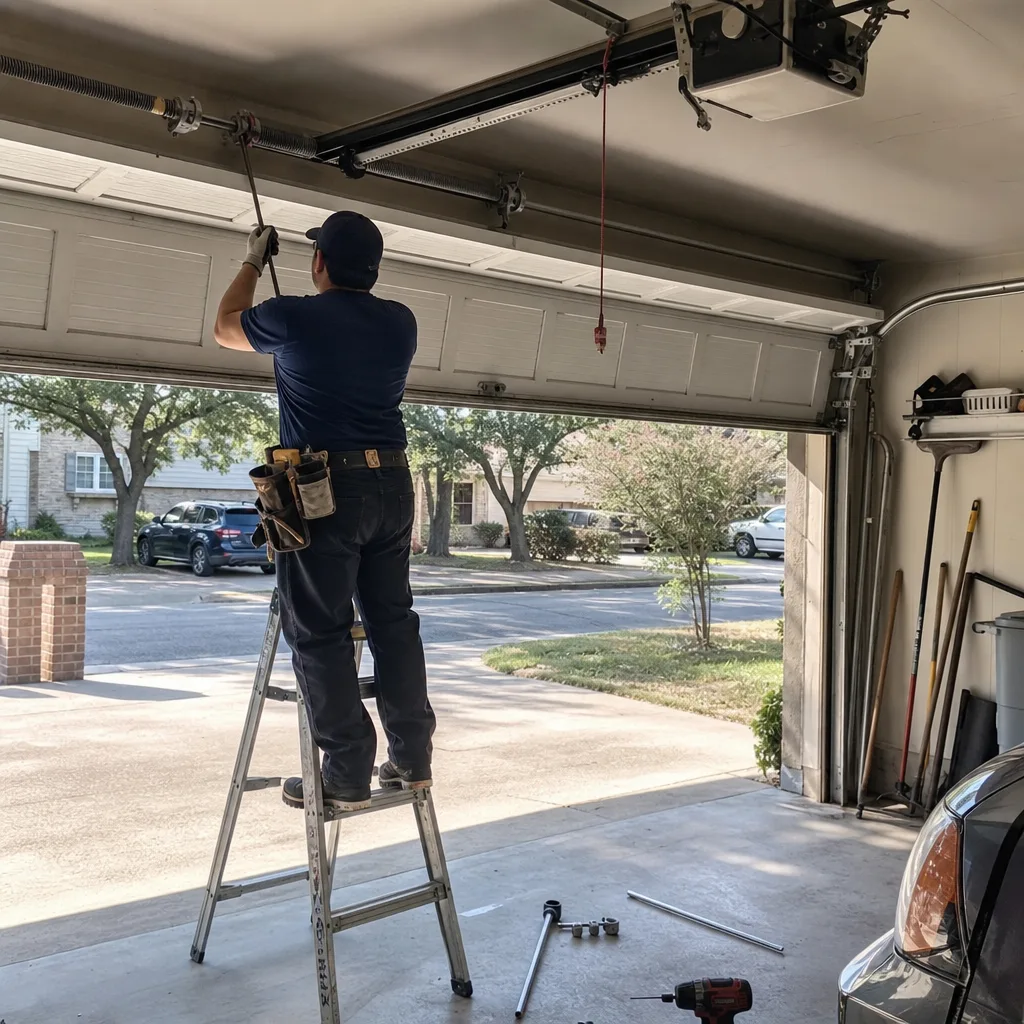
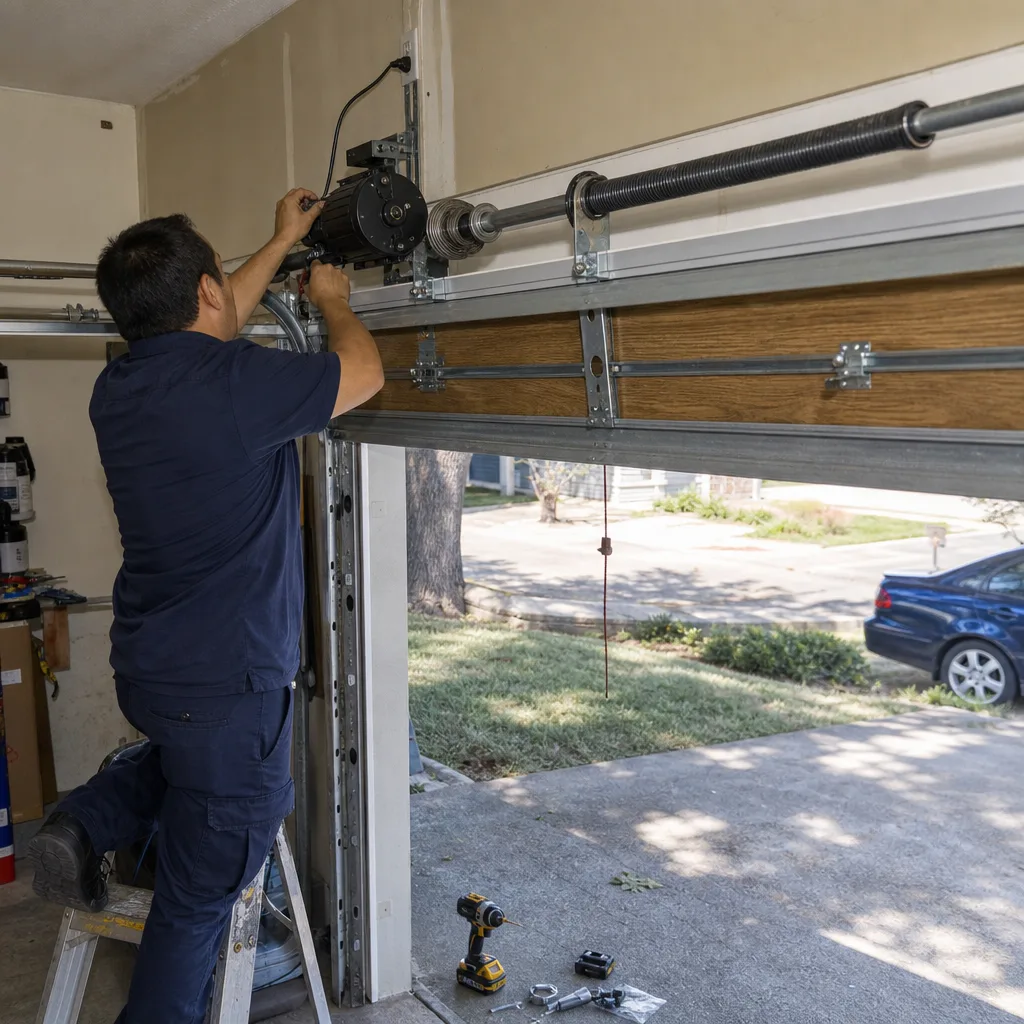
Cables are the second load-bearing component on a garage door system, and they fail in stages that are visible if you know where to look. On a standard sectional door, you have two cables: one on each side, running from the bottom bracket up alongside the door and wrapping around a drum at the top. These cables carry the door’s weight when the spring does its job, and they are under constant tension.
Here is the inspection sequence we use, in the order we check it:
- Look at the bottom bracket first. This is the L-shaped steel bracket bolted to the bottom corner of the door. The cable attaches here. This is where fraying starts, because the bracket is the fixed point that absorbs the most movement stress. Run your eyes along the first 12 inches of cable above the bracket. Look for individual wire strands separating from the main bundle (this is true fraying) and for discoloration (rust, which weakens the wire in Arlington’s humid months).
- Trace the cable upward to the drum. The drum is the spool at the top of the torsion bar. Watch for any point where the cable is not sitting neatly in the drum’s groove. A cable that has jumped the groove and is wrapping over itself is wearing against itself, and it will develop fraying quickly at that point.
- Look at the cable where it passes through the track opening. On many doors, the cable passes close to the vertical track, and a door that is slightly out of balance will push the cable against the track edge. This creates a wear point that looks like a flattened section of cable, often shiny where the metal has polished itself against the track.
- Check for the shark’s tooth. Early-stage fraying looks like one or two wire strands that have broken but not yet separated. They stick out at an angle, like a small tooth. A single shark’s tooth means you have a few weeks, possibly longer, but it is already a sign that the cable has exceeded its service life. Multiple shark’s teeth, or a section where the cable diameter is visibly reduced, is a same-day safety stop.
Here is the plain decision rule: if you can count individual broken strands at arm’s length, the cable is cosmetic damage but still load-bearing. If you can see a gap in the cable bundle, or if the cable is fuzzy over a section longer than an inch, stop using the door. A cable that snaps under load drops the door on whatever is under it, and in a Arlington garage that usually means a car, a bike, or a person.
When we complete a cable or spring inspection, the technician photographs what was found before quoting any replacement. That is Clause 4 of The Haven Standard: the failed component gets documented because you should see the evidence before you spend money. That standard applies on every job we do in Arlington.
Speed and Force Anomalies: Too Fast, Too Slow, Uneven Movement
A garage door that moves at the wrong speed is a diagnostic signal, not a personality quirk. Here is what each anomaly means and which part is responsible.
Door moving too fast: The spring is over-wound for the door’s weight. This happens when a spring is replaced with a larger wire size than the door requires, or when a previous technician wound the spring without measuring the door. An over-powered door feels snappy, like it is eager to open, and it usually slams harder on the down cycle. The safety consequence is real: the door’s travel time is shorter than the automatic reverse sensor is designed for, and force settings can be exceeded. A door moving too fast needs a spring tension adjustment, which is a job for a technician because the spring remains lethal under tension during the adjustment.
Door moving too slow: The usual cause is a spring that is under-wound or has lost tension. When a spring weakens, the opener motor has to work harder to move the door, and the door travels slower as a result. On a LiftMaster or Chamberlain opener, you will also hear the motor strain, a low groaning sound that suggests the opener is doing work the spring should be doing. A secondary cause is friction: dry rollers, a track that has been knocked out of alignment, or a door that is slightly too tight against the weather seal. In Arlington, where driveway settling shifts the garage slab over time, the track alignment cause is more common than people expect.
Uneven speed (jerky or surging movement): This is the trolley carriage problem from the opening hook. The trolley carriage is the metal bracket that connects the opener rail to the door, and it rides along the rail on runners. When the rail wears, or when the carriage runners wear, the carriage begins to bind, and the door moves in small surges as the carriage catches and releases. You will see the door hesitate for a beat, then jump forward, then hesitate again. A Craftsman or Raynor opener shows this symptom earlier than some other brands because the carriage material is marginally softer. Whatever the brand, the failure timeline is short: a binding carriage under load will eventually stop moving the door entirely, and it can damage the rail in the process.
Force settings are the invisible hand here. Every opener has adjustable force limits, which control how hard the motor pushes. A door that has been running too slow for months may have had its force limit turned up to compensate, and a door running with high force settings is now exceeding the resistance it was designed to meet. An opener on high force will open a door that should have been repaired, but it does so by buying time at the cost of accelerated wear on every other component. We check force settings on every garage door opener repair in Arlington for this reason.
Urgent Versus Watch-and-Wait: A Decision Framework
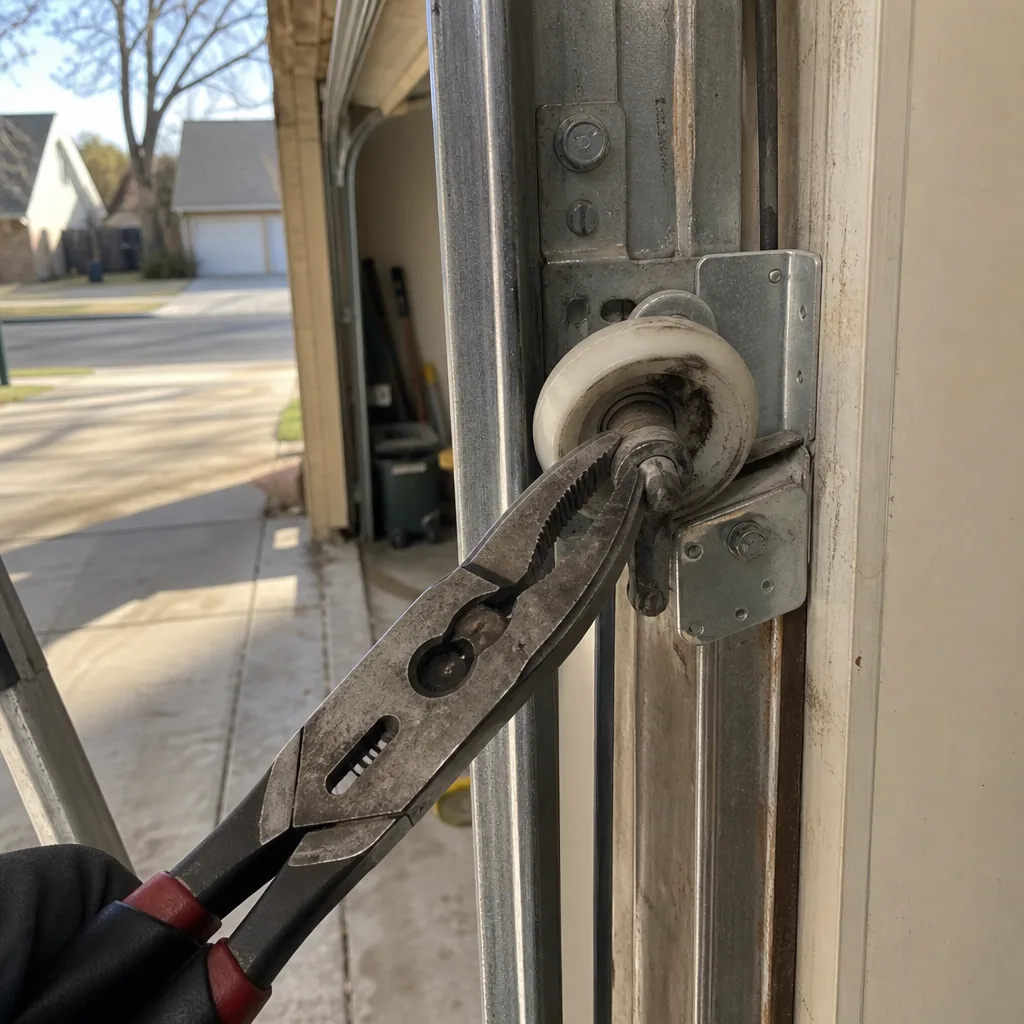
Not every warning sign means the same thing. Here is the framework we use when a customer asks us whether they should stop using the door tonight.
Stop using the door immediately if you observe any of these:
- A frayed cable with a visible gap in the bundle (load-bearing failure risk)
- A torsion spring that is popping or has visible coil separation (imminent spring break)
- A door that reverses direction on its own mid-cycle (sensor or force issue, safety risk)
- A door that falls when you pull the manual release (catastrophic balance loss)
- Any situation where the door is hung unevenly, one side noticeably lower than the other (cable or spring failure in progress)
You have days to weeks if you observe these:
- Light squealing that responds to lubrication
- One or two broken wire strands on a cable (early fraying)
- A door that moves slightly slower than it used to but still travels smoothly
- Occasional grinding that comes and goes with weather (in Arlington, cold snaps firm up grease and cause temporary roughness)
- The opener responding with a delay of one to two seconds before movement (logic board aging or remote signal, not yet a safety issue)
The distinction turns on one question: is the failing part under tension? Torsion springs, extension springs, and cables are all under high tension. When they fail, they fail suddenly and without additional warning. Everything else, the rollers, hinges, opener, track, fails progressively and gives you multiple signals before it stops working entirely. We say this from experience: a roller failure gives you a grinding sound for weeks. A spring failure gives you a loud bang and a door that will not move. There is no third warning with springs.
For any load-bearing part, the clock starts when you first notice the symptom, not when we arrive. That is why our garage door repair service in Arlington treats cable and spring calls as same-day priorities whenever we can.
How to Document Warning Signs on Video Before Calling a Technician
A 15-second video will get you a more accurate remote diagnosis than a five-minute phone description. It also protects you: if a technician has seen the video before arriving, they already know what parts to bring, and the quote you get is tied to evidence you can review. Here is the exact sequence we recommend:
- Shoot the full door from the front, stationary. Stand at the point where you normally park. Frame the entire door, both tracks, and the header. Hold the phone horizontally. This gives the technician the door’s overall condition, panel alignment, and track angle in one frame.
- Walk to one side and shoot the cable path from bottom bracket to drum. Hold the phone at chest height and move it slowly upward along the cable. The slow pan is the whole point: a technician reviewing the video can pause on any frame and inspect the cable inch by inch.
- Shoot the spring area from a safe distance. Do not climb on anything. Stand inside the garage, a few steps back from the door, and aim the camera at the torsion spring on the header. Zoom in slowly if your phone allows it. The video should capture the spring’s color, any visible gaps between coils, and the condition of the spring anchor bracket.
- Record the door moving through one complete cycle. Hold the phone steady, frame the door from the side, and record it opening fully and closing fully. This captures the sound, the speed, and any hesitation. Audio is important: the technician is listening for the grinding, squealing, or popping described in the first section.
- Finish with a close-up of any specific symptom you have noticed. A frayed cable section, a roller that looks wobbly, a hinge that appears disconnected. Hold the phone still for three seconds on the area. A technician can diagnose more from three clear seconds than from thirty seconds of movement.
Send the video when you call or text. Our technicians review documents and videos before they dispatch, and they arrive knowing what to expect. If you bring us a written estimate from another company, the Servo Garage Doors Arlington home office performs a free second opinion, no coupon required, and the video is part of that review.
Arlington-Specific Factors: Climate, Housing Stock, and What We See Most
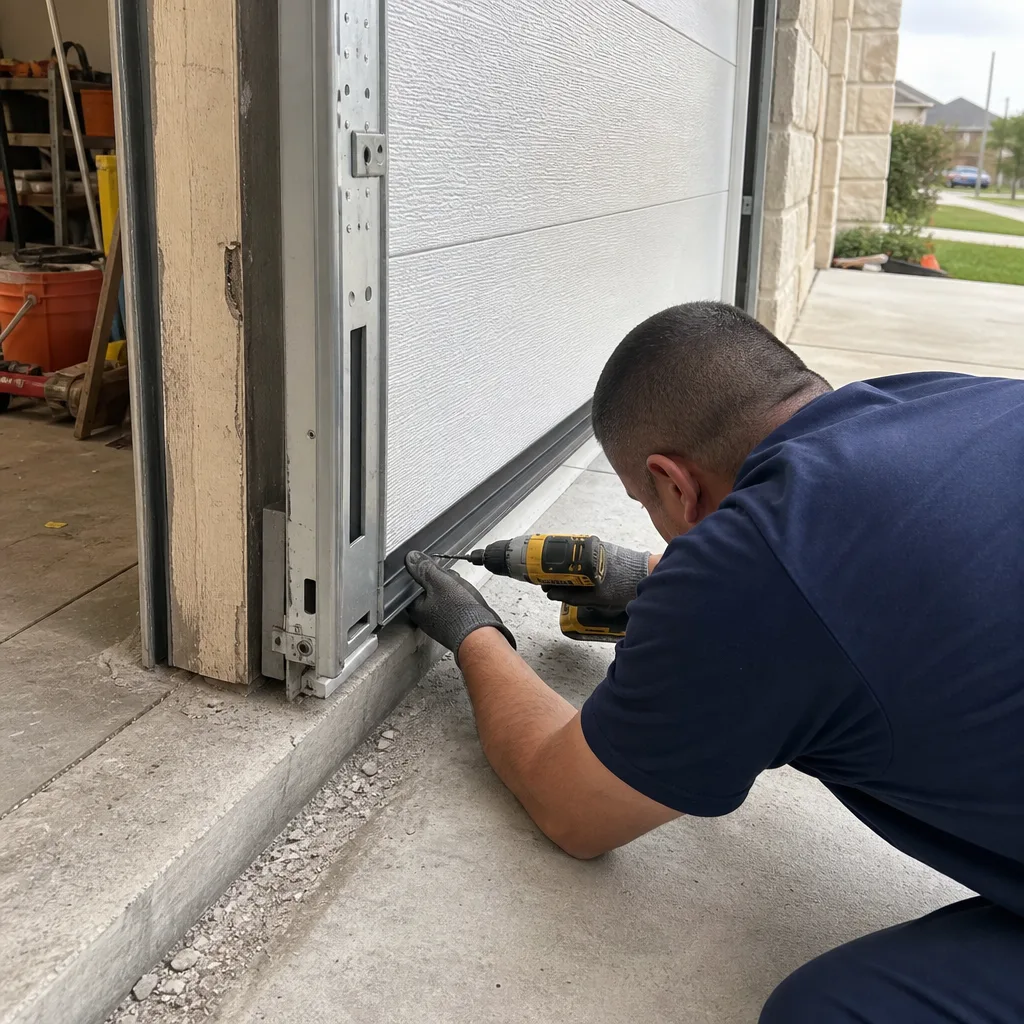
Arlington has a climate that accelerates certain garage door failures and a housing stock that concentrates others. Here is what that means for your door.
Humidity and heat. Arlington summers push garage temperatures well past 100 degrees, and late-summer humidity keeps interior garage air damp. Steel cables rust faster here than in drier climates. Springs oxidize on the surface, which does not directly cause breakage but can indicate the spring has been through enough years to be near the end of its rated cycle life. Rollers with steel bearings, as opposed to sealed nylon bearings, fail faster in humid conditions because the bearing races corrode.
Soil movement. Arlington sits on expansive clay soils that shift with moisture. Driveways settle, garage slabs shift, and when the slab moves, the track alignment moves with it. A door that was perfectly balanced in year one can be out of balance by year five, not because any component failed, but because the ground under the garage moved. This is one reason we see more track misalignment and uneven door travel in Arlington than in cities with more stable soil.
Housing stock. Most Arlington homes were built between 1980 and 2010, and that means doors and openers are reaching end-of-life around the same time. A 2005 house with its original door is running a 20-year-old spring and cable system on its original opener, which in the Dallas-Fort Worth climate is well past the service window. We see clusters of spring and cable failures in specific neighborhoods, the houses that were built in the same phase by the same builder, because the original components all age out on the same schedule.
Opener brands in circulation. The Arlington market leans heavily on LiftMaster and Chamberlain, with Genie and Craftsman in the older housing stock. Raynor and Amarr doors are common on higher-end builds from the last ten years. This matters because parts availability differs by brand: a LiftMaster logic board is generally stocked locally, while an older Raynor-specific part sometimes requires ordering.
If you are considering a full replacement rather than a repair, the garage door installation service in Arlington covers all eight major brands including Clopay and Wayne Dalton, and every install starts with the same written-price-first process.
Common Mistakes to Avoid
- Lubricating a frayed cable. Grease does not repair broken wire strands. It hides them, and it makes the failure look months away when it is days away.
- Ignoring a popping spring because the door still opens. The spring is telling you it is failing. It will not give you a more obvious warning before it breaks. Every day you use the door is a roll of the dice.
- Adjusting the opener force settings to compensate for a slow door. This masks the underlying spring or friction problem, and it puts the opener into a stress state it was not designed for. The opener becomes the next component to fail.
- Replacing one spring instead of both. Torsion springs are installed in pairs and wear at the same rate. If one has broken, the other is at the same age. Replacing one saves money on parts and buys you a second service call, which is not savings.
- Using the door while a cable is visibly frayed. The cable is under enough tension to lift a sectional door, which weighs between 150 and 250 pounds depending on material. That energy does not disappear when the cable fails. It releases into the door, the track, and whatever is nearby.
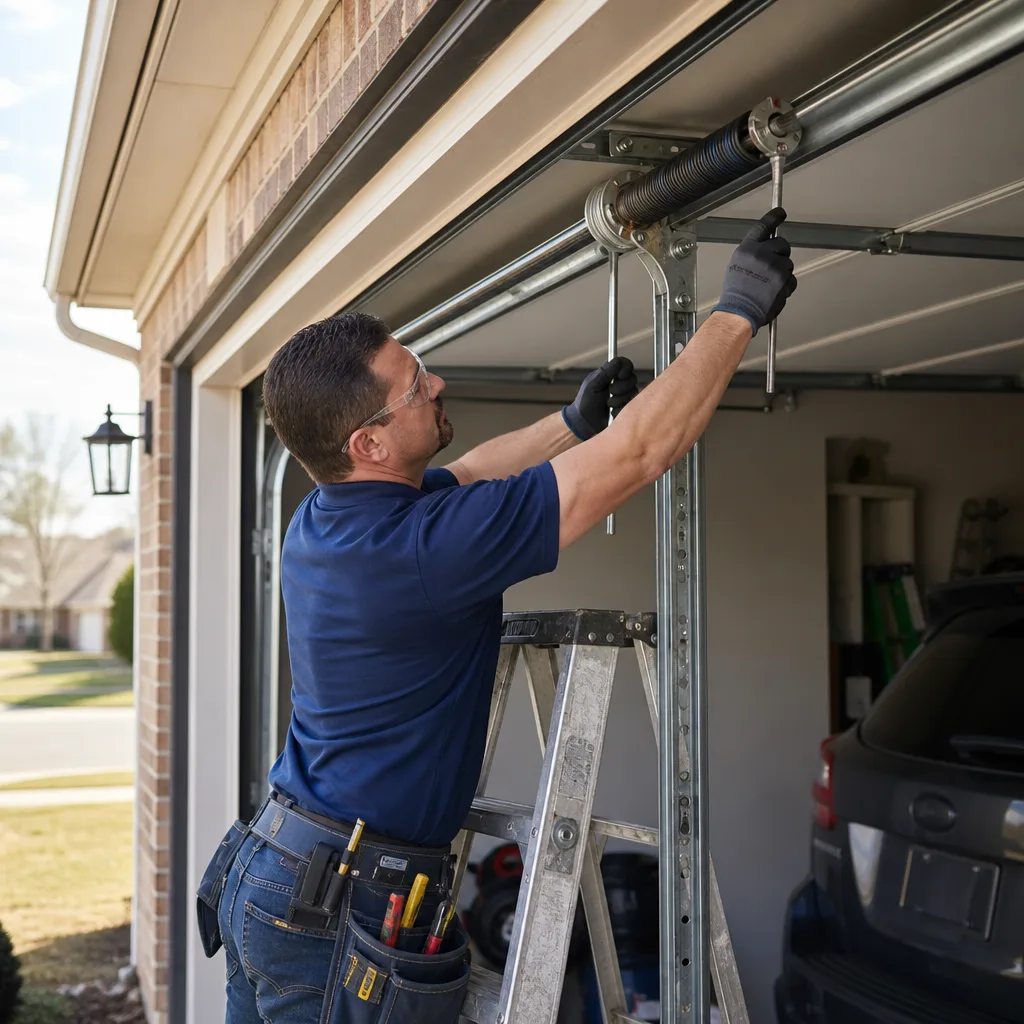
- Trying to replace a torsion spring yourself. The spring stores enough energy to break bone. The winding bars, the process, and the risk are not appropriate for a homeowner project. In Arlington, where two-thirds of the doors we inspect are torsion spring systems, this is the single most dangerous DIY mistake we see.
- Accepting a verbal quote. If a contractor will not write the price and scope down before starting, you have no record of what was agreed. We have rebuilt trust with customers who had been through that. A written price first is Clause 1 of The Haven Standard for a reason.
When to Call a Professional
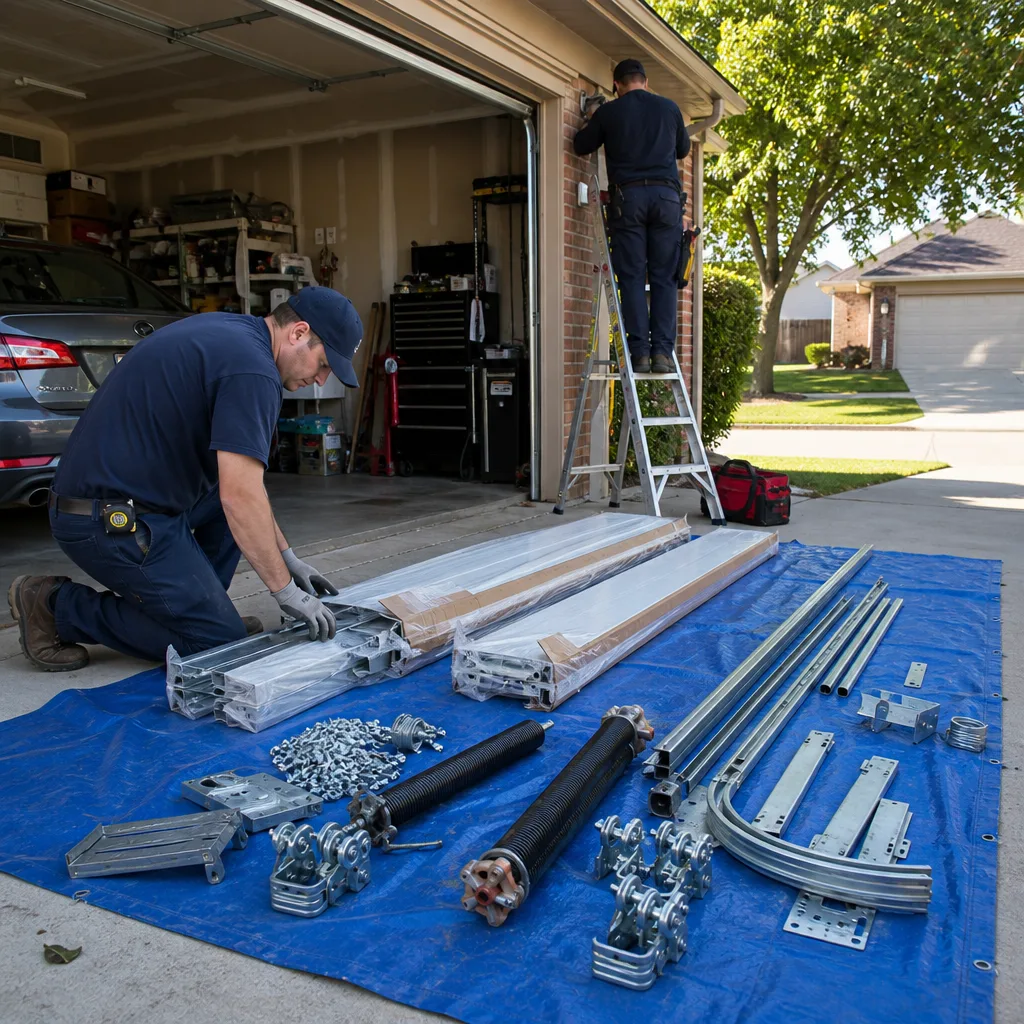
Call a professional when the failing component is under tension: springs, cables, or a door that hangs unevenly. Call when the door has stopped responding to the opener but the opener still runs (this is usually a spring or carriage failure). Call when you have documented a symptom on video and want a diagnosis without a service call taking up your whole day. And call when the door has done something dangerous: reversed mid-cycle, dropped, or pinned something. Servo Garage Doors Arlington offers free estimates in Arlington, and the price you get is written before any work begins. Call (682) 452-1782.
Frequently Asked Questions
A popping or snapping torsion spring is the most common load-bearing failure we see, driven partly by Arlington’s heat and humidity aging springs faster than the manufacturer’s rated cycle life suggests. The popping sound is coil separation, and it means the spring is days or hours from breaking, so stop using the door and call for repair.
Torsion spring replacement in Arlington typically runs $180 to $340 for a standard single door and $250 to $450 for a double door, including both springs and labor. At Servo, you get a flat written price before work starts, and we show you the broken spring before we quote it, per Clause 4 of The Haven Standard, so you never pay for a part you did not see.
Yes, if the door is open when the spring breaks, the door can drop, because the spring is the counterweight for the door’s entire mass. That is why a popping spring is a stop-use-immediately condition, not a watch-and-wait condition, and why we treat spring and cable repairs in Arlington as same-day priorities.
With our humidity, cables typically last 8 to 12 years before showing early fraying, but doors that have gone through years of track misalignment will show fraying sooner. If you see a single broken wire strand, you have days to weeks; if you see a fuzzy section longer than an inch, stop using the door and call (682) 452-1782 for a same-day inspection.
For the common repairs in Arlington, yes: torsion springs, cables, rollers, hinges, and the standard LiftMaster and Chamberlain logic boards are stocked on our trucks. If a specific Raynor or Craftsman part is not on board, the technician tells you before scheduling the second visit, and that second visit is still covered under the original written quote.
No. The price you get is written and scoped before work starts, per Clause 1 of The Haven Standard, and it does not change unless you approve additional work in writing after seeing the evidence for why it is needed. If a technician finds something unexpected, they photograph it and quote it before touching it, never after.
The Bottom Line
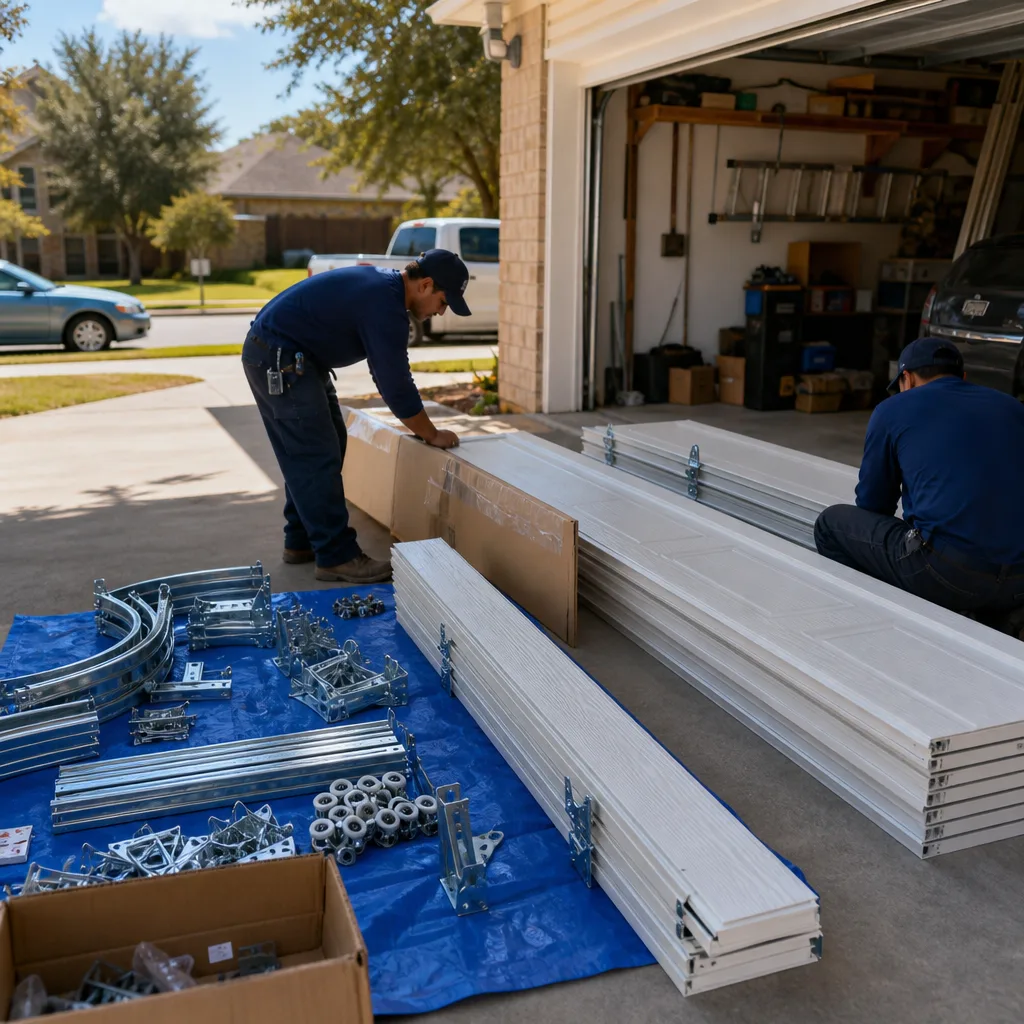
A garage door warning sign is a message from a specific component, and the message has a timeline attached. A squealing hinge gives you weeks. A popping spring gives you hours. A frayed cable with a visible gap gives you nothing. Learn to read the signs, document what you see and hear, and call before the load-bearing parts make their own decision about when to let go. Explore our more guides & resources to keep your door running safely. The written-price-first process is not a marketing point; it is how you know what you are paying for and why. If your door is talking to you in Arlington, we can tell you what it is saying.
Written by Marcus Deller, Owner at Servo Garage Doors Arlington, serving Arlington since 2015.