
Last updated September 20, 2026
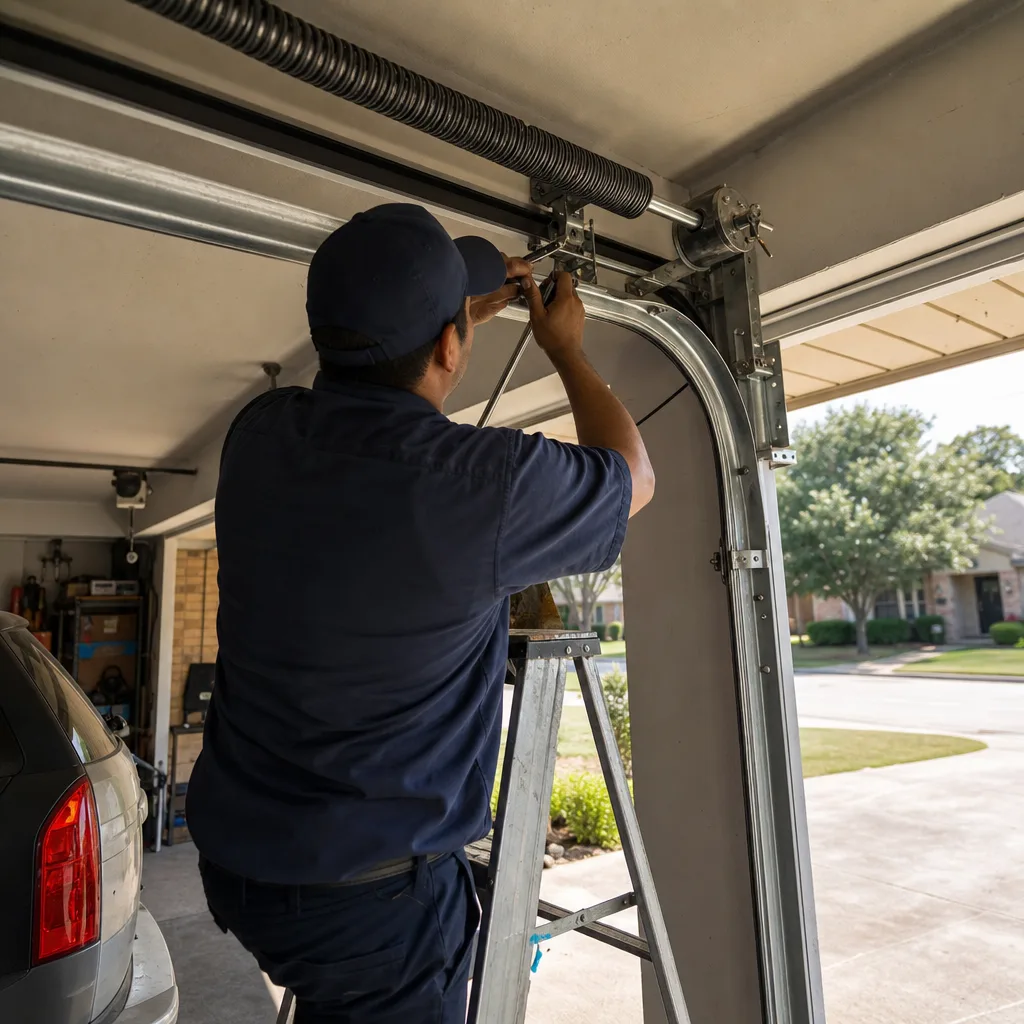
Full 25-point door and opener safety check with every visit - springs, cables, rollers, tracks, and your LiftMaster or Chamberlain opener included
You get a price before we start. It does not change when the truck arrives.
 Before
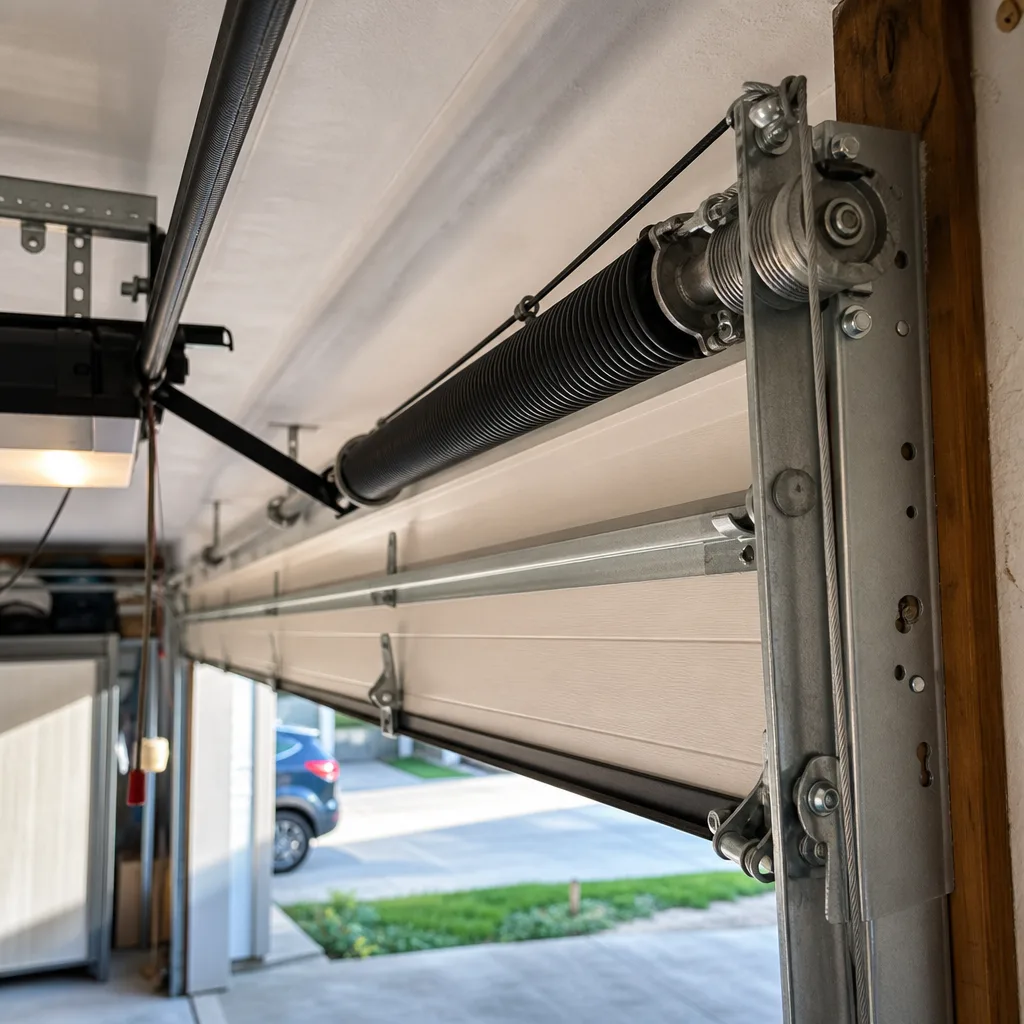 After
After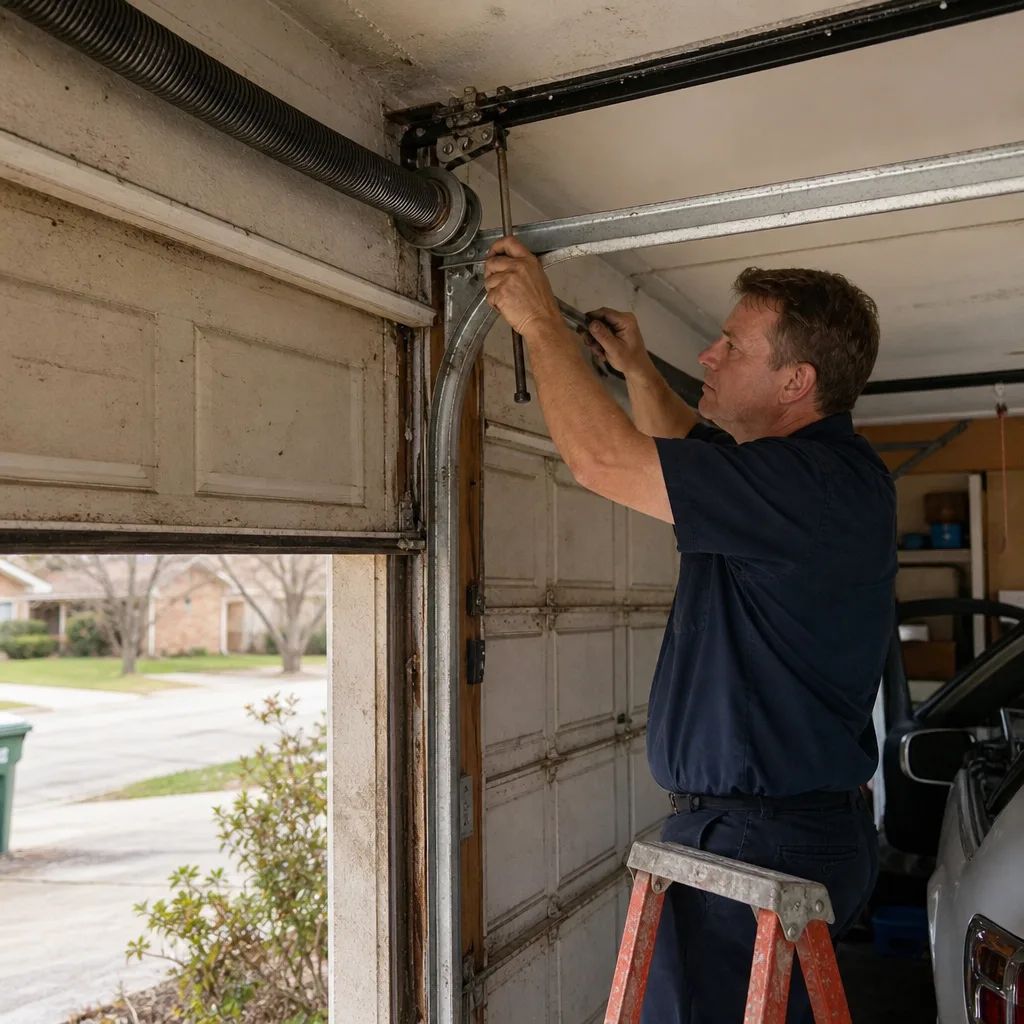 Before
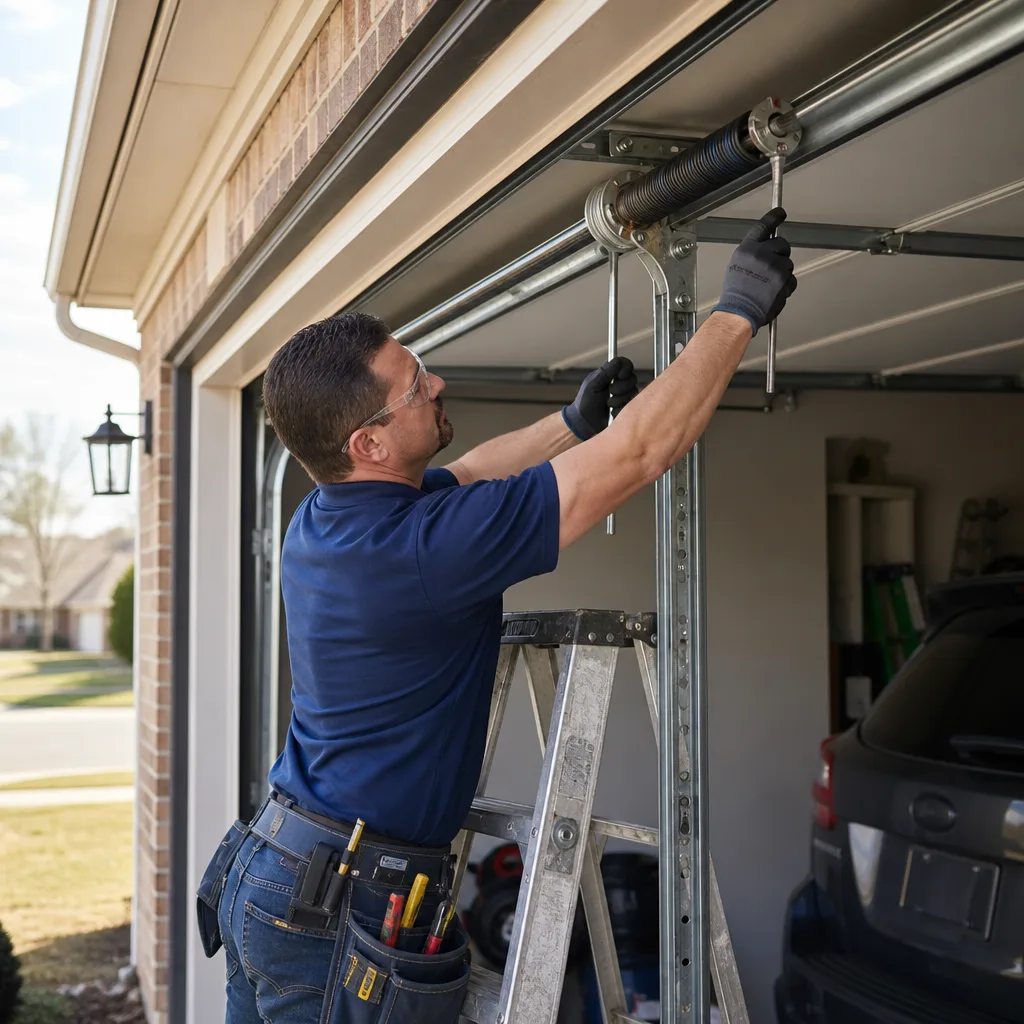 After
After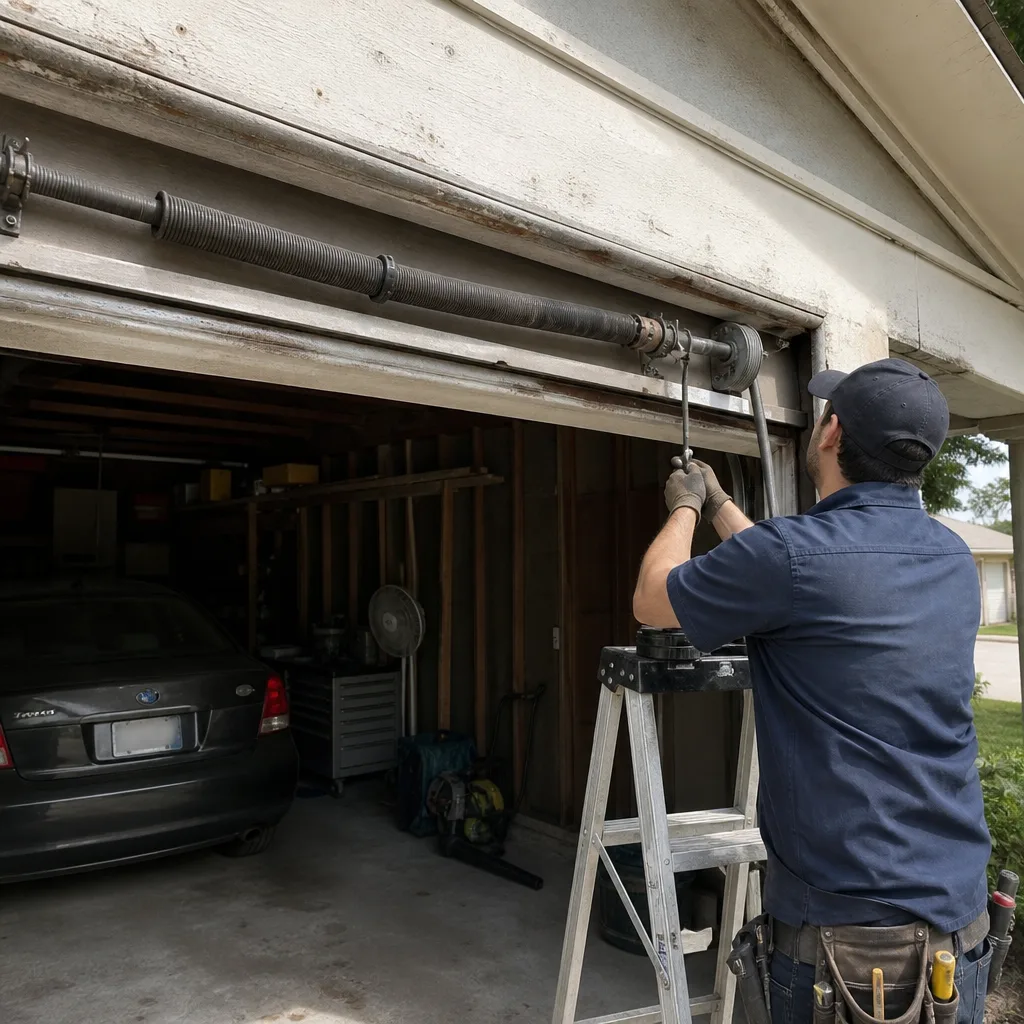 Before
 After
AfterHow to Hire a Garage Door Contractor in Arlington: A Step-by-Step Guide
Three Arlington contractors can quote the same torsion spring replacement and produce estimates ranging from $180 to $490 for identical parts. The spring isn’t different. The labor isn’t meaningfully different. What changes between those three quotes is what got added to the line items: a “service call fee” folded into labor, a “premium brand” markup on a spring that costs the same at the supply house, or a replacement opener quoted as a “recommended safety upgrade” before anyone measured whether yours failed. This guide walks through a hiring process built around quote transparency, because the quote is where Arlington homeowners lose money, not where they save it. For the complete guide to garage door in Arlington, including maintenance and installation, see our other resources. You’ll learn what credentials matter in a state that doesn’t license garage door contractors, the exact language to use when requesting a written price, and the five questions that separate a documented repair from a guess.
Quick Answer
Hiring a garage door contractor in Arlington means asking for a flat, written, itemized price before any work starts, verifying the company’s own insurance and background-check policy since Texas doesn’t license this trade, and refusing any quote that bundles parts and labor into a single number you can’t compare. A trustworthy contractor will show you the failed component, explain the repair in plain language, and hand you a written scope before touching a tool.
Table of Contents
- Why Quotes in Arlington Vary by $300 for the Same Spring
- The Texas Licensing Reality: What Credentials Actually Matter
- Before You Call: Three Things to Check Before the Phone Rings
- The Five Questions to Ask Before a Technician Touches Anything
- How to Request an Itemized Quote: Exact Language to Use
- Red Flags Specific to Garage Door Service Calls
- How to Use a Written Price-First Policy to Your Advantage
- How to Verify a Contractor in Arlington: A Practical Checklist
BeforeAfterWhy Quotes in Arlington Vary by $300 for the Same Spring
A torsion spring is a torsion spring. It has a wire diameter, an inside diameter, a length, and a wind direction. A 0.25-inch wire spring rated for a 7-foot door costs roughly the same whether a cut-rate operation or a premium shop installs it. So when you see $180 and $490 quotes for the same replacement in Arlington, the gap isn’t in the part. It’s in the structure of the quote itself.
Some contractors bundle parts and labor into one line item: “Torsion spring replacement: $490.” That single number is impossible to compare against another single number, because you can’t see what the spring actually cost, what the labor rate is, or whether anything else got tucked inside. We’ve seen Arlington quotes where a $70 spring became a $240 line item because “spring” and “labor” were merged, and the markup vanished into the total.
An honest quote breaks the number down:
- Part cost: the spring itself, by wire diameter and rating, with the brand named.
- Labor: a flat rate for the repair, not an hourly estimate that can drift.
- Any additional components: center bearing, cable replacement, drum inspection, each on its own line.
When every component has its own line, you can compare two quotes side by side. When it’s one bundled number, you can’t. That’s the entire game, and it plays out every day across Arlington, from the older subdivisions off Cooper Street to the newer builds near Lake Viridian.
Requesting line items isn’t rude. It’s how you find out whether a contractor’s pricing is built on parts or built on obscurity. A contractor who has been quoting this way for years will send you a written itemization without hesitation. A contractor who stalls is telling you something about the invoice you’d receive at the end.
The Texas Licensing Reality: What Credentials Actually Matter
Here’s what most Arlington homeowner guides won’t tell you: garage door contractors in Texas are not required to hold a state-issued contractor license. The Texas Department of Licensing and Regulation (TDLR) does require a license for tow truck operators, air conditioning contractors, and electricians, but garage door installation and repair falls outside that scope. There is no state test, no state registration, and no state oversight board for this trade.
That means the phrase “licensed and insured” on a garage door company’s website means less than it does for, say, your HVAC contractor. The license, if one exists, is typically a city-issued general business permit or a Door and Access Systems Manufacturers Association (DASMA) certification, which is a genuine credential that covers spring and door safety standards.
So what actually matters in Arlington?
- General liability insurance and workers’ compensation: request a certificate of insurance. If a technician is hurt on your property and the company lacks coverage, your homeowner policy can be pulled in. This is the credential that protects you directly.
- Background-checked technicians: the person walking into your garage is the credential. If the company can’t say, in writing, that its technicians are background-checked, move on.
- Written warranty terms: a real warranty exists on paper, with terms and duration. A verbal “we’ll take care of you” is no warranty at all.
- Documentation practices: does the company photograph what they found and provide a written record? That practice, more than any certificate, signals how the work itself will be handled.
When you ask for proof of insurance and a company can’t produce a certificate, that’s not a paperwork delay. It’s a warning. The same applies to anyone who talks about “a decade of experience” but can’t put a license number, insurance certificate, or written warranty in front of you.
Before You Call: Three Things to Check Before the Phone Rings
Most homeowners call a garage door contractor in panic mode: the door won’t open, the car is inside or outside, and the first name that appears in the search results gets the call. Before that happens, read our DIY vs Professional Garage Door: The Arlington Homeowner’s Decision Guide to know what’s safe to handle yourself. That’s how you end up hiring an operation that showed up fast but couldn’t produce a written price. Taking ten minutes to check three things before the phone rings changes the outcome.
1. What the Website Actually Says About Pricing
Look for a dollar range on the page. If a contractor’s website says “call for pricing” or “contact us for a quote” on a repair page, it’s a signal. The price isn’t being hidden because pricing is complicated. It’s hidden because the sales model depends on getting a technician into your driveway before a number is discussed. In our Arlington garage door repair practice, we publish price ranges on the page, in dollars, before anyone calls. That’s not a marketing tactic; it’s Clause 1 of The Haven Standard, and it exists because quoted pricing, before work starts, is the single most important protection a homeowner has.
2. Whether the Company Names Its Technicians
Look at the website’s “about” or “team” section. Does it name a real person? An owner? A lead technician? An operation that anonymizes its staff often does so because turnover is high and the person who installs your opener today won’t be reachable in four months when the logic board fails. A named owner, with a documented record of the business’s history, is an accountability signal that matters more than review stars.
3. What the Company Documents
Search the website for words like “photo,” “documentation,” “written record,” or “inspection report.” If the company’s entire pitch is “fast, friendly, affordable,” without any mention of what you’ll receive after the job, that’s a red flag. A garage door company that doesn’t photograph the failed component can’t show you what actually broke. A company that does photograph it, as a matter of policy, builds trust through evidence rather than adjectives. That’s the founding rule behind Servo Garage Doors Arlington, and it happens to be the exact habit that protects you when a repair doesn’t hold.
The Five Questions to Ask Before a Technician Touches Anything
When a technician arrives at your Arlington door, the natural instinct is to let them get to work. Their hands are on the door, they’re the expert, and asking too many questions can feel like arguing. But five questions, asked before a single tool comes out, separate a transparent repair from an upsell session.
- “Can I see the failed component before you price the replacement?” This is the most revealing question you can ask. A technician who opens the door, points at the torsion spring, and walks you through the break before quoting is working with evidence. A technician who says “it’s bad, we need to replace the whole system” without showing you the part is not quoting a repair; they’re quoting a sale. Clause 4 of The Haven Standard exists because Marcus Deller, who owns Servo, made it a founding rule that the customer sees the failed part before anyone quotes a replacement.
- “Will the price be flat and written before you start?” If the answer is “we’ll see how it goes” or “depends on what else we find,” you’ve just learned how the invoice will be built. A flat price, written down, before work begins means the technician is committing to a number. If they discover something additional mid-job, the correct response is another written scope for the new work, with your approval before it proceeds.
- “Does the labor carry a separate warranty from the parts?” Most good springs carry a manufacturer’s rating for cycle life, typically 10,000, 20,000, or 30,000 cycles. The labor warranty is separate and shorter. Understanding both protects you from a situation where the part fails under warranty but the labor to install the replacement costs you another flat fee.
- “Are you background-checked, and is the company insured?” You’re welcoming a stranger into your garage, often out of view of the street. A company that answers this without hesitation has nothing to worry about. A company that deflects does.
- “Will I receive a documented record when you’re done?” A written summary of what was found, what was replaced, what was adjusted, and what was photographed. For us, that’s a photo record included on every visit, tracing back to the founding rule Servo was built on in 2015. For other companies, the answer might be a scribbled receipt or nothing at all. You want to know which it will be before the work starts, not after.
How to Request an Itemized Quote: Exact Language to Use
The way you ask for a quote determines the quality of the quote you receive. A vague “how much to fix my door?” invites a vague answer. A precise request, structured around line items, makes it hard for any contractor to obscure their markup.
Here’s the language to use, ideally in an email or text so you have a written record:
“I need a written, itemized quote for the repair. Please break it down by part, part number or specification, labor as a flat rate separate from parts, and any additional fees. I’ll review it before approving any work.”
Three things happen when you send this message. First, contractors who quote honestly will comply, because their pricing structure is already built around line items. Second, contractors who bundle to obscure their markup will push back: “we don’t work that way,” or “it’s hard to itemize until we see it,” or “our quotes are just a total.” That pushback isn’t a denial of your request; it’s a disclosure of how their pricing model works.
Third, you’ll start receiving quotes you can actually compare. One Arlington homeowner we worked with received three quotes for the same Wayne Dalton spring replacement. One was itemized: $98 for the spring, $150 flat labor, $0 additional fees. The second was semi-itemized: $240 “spring and labor,” which at least grouped the two clearly. The third was a single $390 line item reading “torsion spring replacement complete.” Without asking for itemization, all three looked like the same amount of information. With itemization, the markup was visible.
For installation work, such as a new door installation in Arlington, itemization means door cost, haul-away, track and hardware, labor as a flat line, and any opener integration listed separately. For opener work, the opener repair and installation quote should separate the unit, the labor, the safety sensor alignment, and any programming.
Red Flags Specific to Garage Door Service Calls
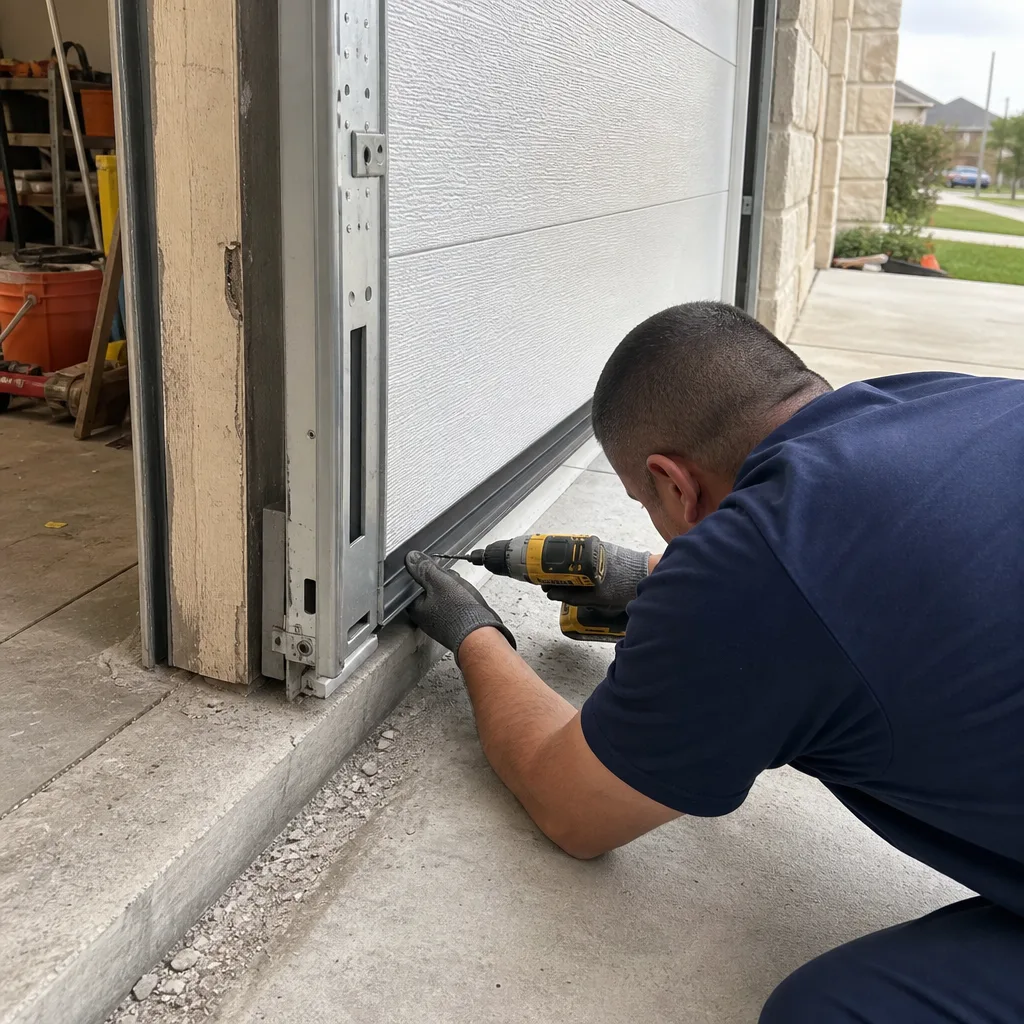
Every trade has its tells. Garage door service calls have a playbook of their own, and recognizing the moves before a technician arrives saves you from paying for a replacement you didn’t need.
- Urgency language over the phone: “if you don’t replace this spring today, the door could come crashing down” is true in a narrow sense but false as a sales tactic. A broken spring does not mean the door is actively dangerous while sitting closed. A technician who leans on terror to push a sale is working against you, not for you.
- Same-day-only pricing: “this quote is only good if you sign today” is a classic pressure mechanism. It’s also a signal that you should call someone else. A written quote from a stable company holds for a reasonable window.
- Quoting a replacement before demonstrating what failed: if the technician can’t point to the specific part that failed, explain why it failed, and show you the failure, the “replacement” being offered is built on a sight-unseen assumption. You’re being asked to trust a diagnosis that was never made.
- Refusing to separate parts and labor: covered above, but worth repeating: a bundled quote is a markup hiding place. It’s the single most reliable red flag in the garage door trade.
- No written record of the visit: if you don’t receive some form of written documentation when the technician leaves, you have no evidence of what was claimed, what was done, and what the warranty covers. That’s not a technicality; it’s your leverage if the repair fails.
- The “while we’re here” upsell: the spring replacement goes well, and suddenly the technician is recommending a new logic board, a new trolley carriage, and a “starter kit” for the rollers. Some of these recommendations may be valid. But every single one should come with its own written line and its own plain-language explanation, not a hand-wave toward “preventative maintenance.”
Arlington’s housing stock is old enough that many homeowners are on their second or third garage door system. That means the house itself isn’t a red flag, but it does mean the door has been through cycles: springs have been replaced, tracks have been adjusted, sensors have been knocked out of alignment by a truck bumper. A technician who understands this, who works with the existing hardware rather than replacing it at the first sign of wear, is the one you want.
How to Use a Written Price-First Policy to Your Advantage
The written price-first policy, the one we follow at Servo Garage Doors Arlington, isn’t just a nice-to-have. It’s the single most effective tool a homeowner has for controlling the cost, the scope, and the outcome of a garage door repair.
Here’s how it works in practice, and how you can use the same principle with any contractor:
When a technician arrives and begins diagnostics, let them. Watch, ask questions, but don’t interfere. Then, when the diagnosis is complete and the technician is ready to begin work, say this:
“Before you start, I need the flat price in writing, with the scope of work listed. If you find anything else while working, I’ll need a separate written line and my approval before you proceed.”
This two-sentence request changes the entire power dynamic. The technician now understands that you know what a proper quote looks like. You know that labor and parts should be separate. You know that additional work requires additional written approval. You’re not being difficult; you’re being precise.
The reason this matters is simple: most homeowners never ask. The technician quotes a number, the homeowner says yes or no, and the invoice at the end reflects whatever the technician thought was reasonable. By asking for a written scope before work starts, you’ve eliminated the worst-case scenario: a quote that was verbally agreed to at $300 becoming an invoice for $600 because “the center bearing was shot too.”
That center bearing may well have been shot. But it should be documented, priced, and approved before a replacement goes in. Written price-first is not about distrusting the technician. It’s about ensuring both parties are operating from the same document. At Servo, this is Clause 1 of The Haven Standard, and it’s the reason we publish price ranges in dollars rather than asking you to call for a quote.
How to Verify a Contractor in Arlington: A Practical Checklist
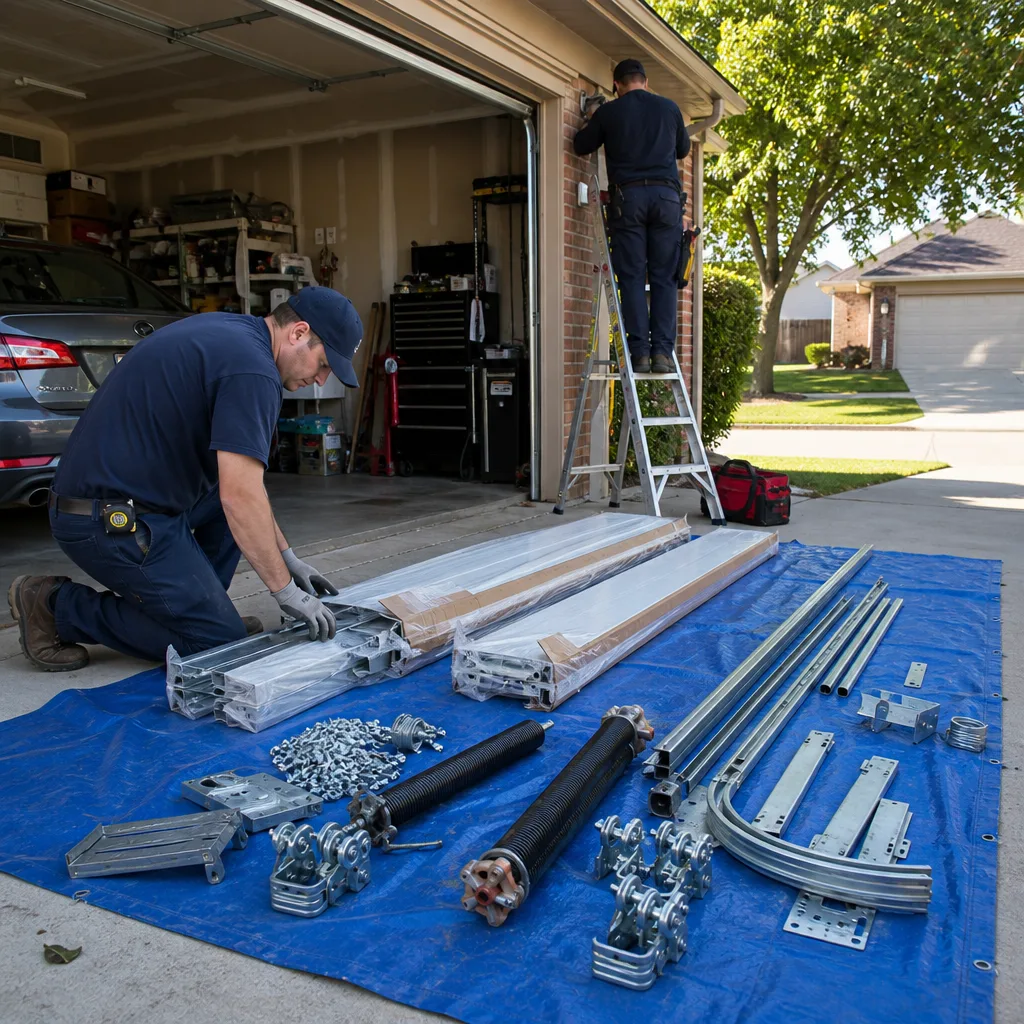
Run through this checklist before hiring, and you’ll have covered the bases that most Arlington homeowners skip.
- Request a certificate of insurance. Both general liability and workers’ compensation. If the company hesitates, that’s your answer.
- Confirm background checks. Ask specifically: “Are your technicians background-checked?” and look for a yes or no.
- Request a written, itemized quote. Before any work starts. Parts and labor separated. Flat rates, not hourly estimates.
- Ask about documentation. Will you receive a written record of findings and completed work? A photo record?
- Verify the warranty. In writing. Parts warranty and labor warranty stated separately.
- Check the brand coverage. If you have an Amarr door, a shop experienced with Amarr hardware will do better than one that works almost exclusively with Clopay. We service all eight major brands, including LiftMaster, Chamberlain, Genie, Clopay, Amarr, Wayne Dalton, Craftsman, and Raynor, because Arlington’s housing mix is broad enough that specializing in one brand would be a disservice.
- Ask for a second opinion. If another company has already handed you a written estimate, bring it. We offer a free second opinion on any competing written estimate, and we’ll assess it line by line, because a good quote can always withstand a second look, and a bad one needs one.
Verification isn’t about suspicion. It’s about confirmation. The right contractor will treat your checklist as a sign that you’re a serious customer, not a difficult one.
Common Mistakes to Avoid
- Skipping the itemization because you’re in a hurry. The pressure of a broken garage door is real, especially in Arlington where summers make a non-opening door a real problem for a car sitting outside. But the ten minutes it takes to get a written, itemized quote is the cheapest insurance you’ll ever buy.
- Hiring on speed alone. “Fastest response time in Arlington” means nothing if the technician’s diagnosis is wrong. Speed and accuracy are not the same thing, and a fast wrong answer costs more than a slower right one.
- Accepting a verbal quote. If it isn’t written, it doesn’t exist. If you later contest the invoice, the contractor’s attorney will ask for the written quote. There won’t be one.
- Assuming “licensed and insured” means something specific. In Texas, garage door contractors aren’t state-licensed. Ask for the actual certificates and names, not the phrase.
- Paying for a replacement without seeing the failed part. A new opener is a real cost. A new opener you didn’t actually need because the limit switch needed adjustment is an avoidable one.
- Skipping the documentation request. If you don’t have a written record of what was found and done, your warranty claim is a memory contest. Don’t put yourself in that position.
- Choosing the cheapest quote without comparing line items. A $120 spring replacement that doesn’t include a center bearing inspection or cable check isn’t cheaper. It’s thinner.
When to Call a Professional
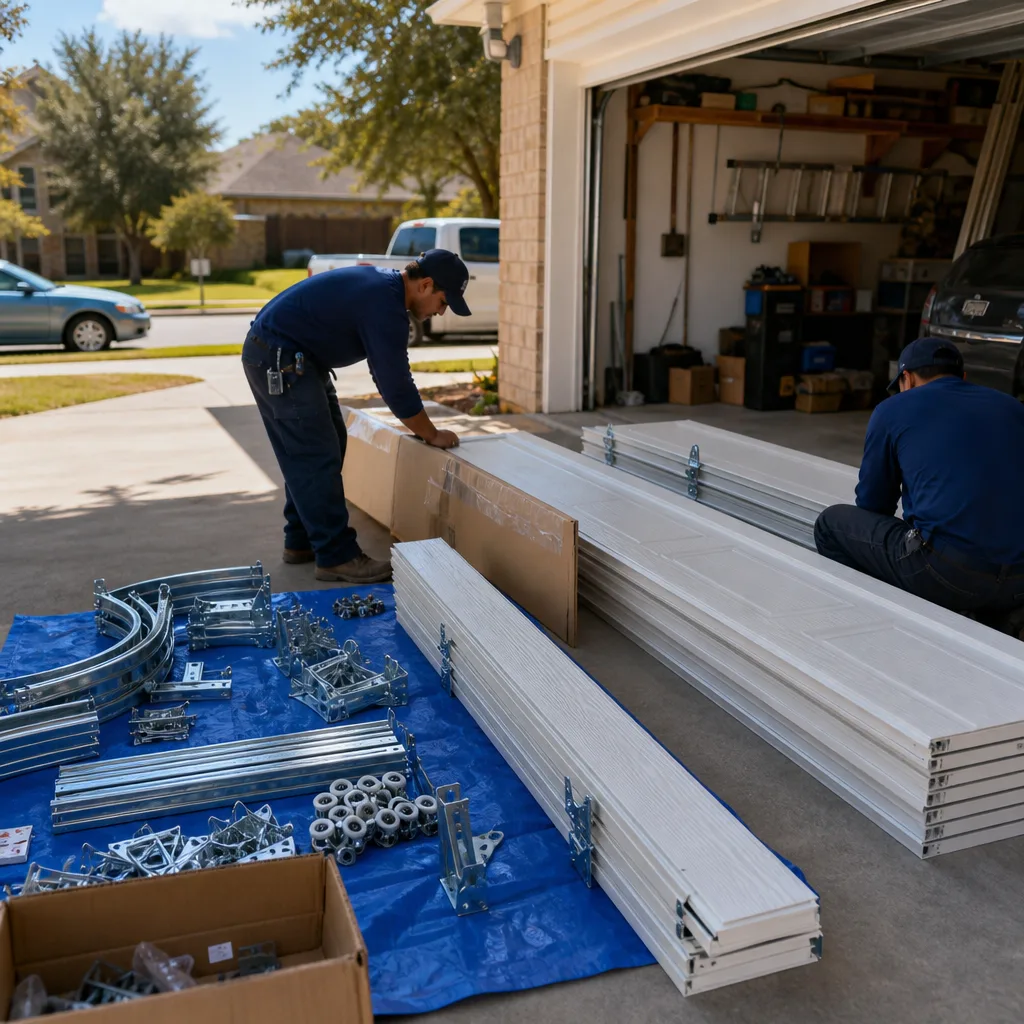
A garage door system combines several hazards that make DIY risky: high-tension torsion springs that store enough energy to cause serious injury if they release suddenly, cables under constant load, and panels heavy enough to crush anything beneath them. If your spring has snapped, your cables are frayed, or your door is off its tracks, stop and call a trained technician.
There are some jobs you can handle: tightening visible hardware, lubricating rollers and hinges with a silicone spray, clearing debris from the photo-eye safety sensors. But if the problem involves a spring, cable, track, or the opener’s electrical logic board, the right move is to bring in someone trained, insured, and documented. These injuries happen fast and they happen to people who thought they could save $200.
Servo Garage Doors Arlington offers free estimates in Arlington. Call (682) 452-1782 and you’ll reach a live person, 24/7, including holidays, not a recording. Every call includes a named technician and an on-the-way text, so you’ll know who’s coming and when.
Frequently Asked Questions
No. The State of Texas does not require a contractor license for garage door installation or repair work. That’s why verifiable credentials like proof of insurance, background-check policies, DASMA certification, and documented work histories matter more than the phrase “licensed and insured.”
In Arlington, you’ll typically see torsion spring replacement quoted between $180 and $490, with the range driven primarily by how the quote is structured. An itemized quote from a company that separates parts from labor will usually land on the lower end for a standard replacement; a bundled quote invites markup. Request a line-item breakdown and the price becomes transparent.
Broken torsion springs are the most frequent repair in Arlington, in part because seasonal temperature swings from hot summers to cool winters add stress to the metal. If your door opens a few inches and stops, or if you hear a loud snap from the garage, the spring likely broke. This is not a DIY fix; call a professional. Call (682) 452-1782 for a free estimate.
The answer depends on the part. If the spring is broken, you replace the spring, not the whole door. If the opener’s logic board has failed, you replace that component, not the entire system. A good technician will show you the failed component and explain why it failed before recommending any replacement.
Look for four things: a written price before work starts, a documented photo record of findings and completed work, a warranty that exists on paper, and an actual human being named on the website. If all four are present, you’re working with a company that built its reputation on evidence, not adjectives.
Yes. Servo Garage Doors Arlington provides free estimates in Arlington, and the quote will be flat, written, and itemized before any work begins. Call (682) 452-1782 and you’ll reach a live person, day or night.
The Bottom Line
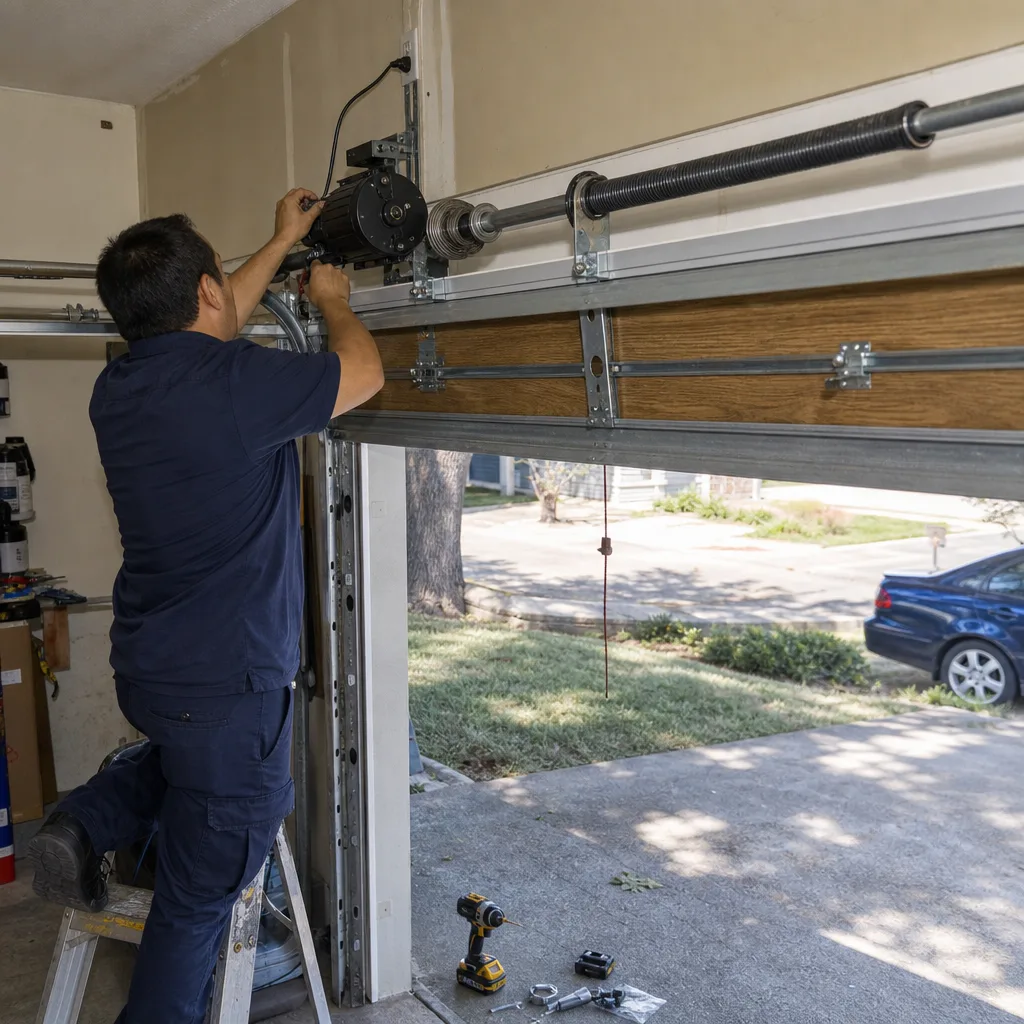
Hiring a garage door contractor in Arlington is a process that rewards patience and documentation. The state won’t license the trade for you, so you verify credentials yourself. The quote won’t itemize itself, so you ask for line items. The technician won’t photograph the failed part unless the company’s policy requires it, so you choose a company that treats documentation as standard practice, not as a favor. The goal isn’t to hire the cheapest contractor or the fastest one. It’s to hire the one who will hand you a written price before touching anything, show you exactly what failed, and leave you with a record of what was done. That’s the entire game, and now you know how to play it.
Written by Marcus Deller, Owner at Servo Garage Doors Arlington, serving Arlington since 2015.